English
 中文简体
中文简体 Español
 عربى
عربى
Six months into an air freshener development program, the fragrance is perfect but the spray pattern is unpredictable on the production line. This is not a formulation problem. It is a valve problem. In aerosol product development, the valve and actuator are the components that decide whether a formula becomes a commercially viable can.
Brands that start with the formula and work outward often discover this painful truth at the pilot filling stage. Experienced development teams do the reverse. They lock the valve, actuator, and container hardware early, then optimize the formula inside that envelope. The valve determines dosage accuracy, spray character, propellant compatibility, and pressure behavior. These are the variables that decide whether a formula can survive pressure filling and deliver a repeatable consumer experience.
What Aerosol Product Development Actually Involves
An aerosol product is an integrated system. Formula, propellant, container, valve, actuator, cap, and filling method must be designed together. Neglecting any one element creates a bottleneck that delays commercialization and inflates development costs.
- Formula - the active ingredient, solvent, and additives that create the intended effect.
- Propellant - a liquefied gas such as butane, propane, or DME, or a compressed gas such as nitrogen. This determines internal pressure and spray driving force.
- Container - aluminum or tinplate. Aluminum cans are common with 20mm valve systems; tinplate is typical for 1-inch systems.
- Valve - the metering device that controls dosage, seal integrity, and compatibility with the formula.
- Actuator - the nozzle that shapes the spray. L-shaped actuators are standard for air fresheners; circular actuators serve general-purpose sprays.
- Cap - protects the actuator during storage and shipping.
- Filling process - the method of charging propellant and sealing the can.
Among these, the valve is the least reversible decision. Changing a formula later is difficult but possible. Changing a valve after the filling line is set up requires new tooling, new QC protocols, and sometimes a completely different can specification. This is why understanding how aerosol valves and nozzles work is foundational knowledge for any product development team.
Choosing the Right Valve: Five Criteria That Determine Success
Valve selection is where aerosol development programs are won or lost. These five criteria should be documented in the project brief before any filling trials begin.
1. Dosage Accuracy and Repeatability
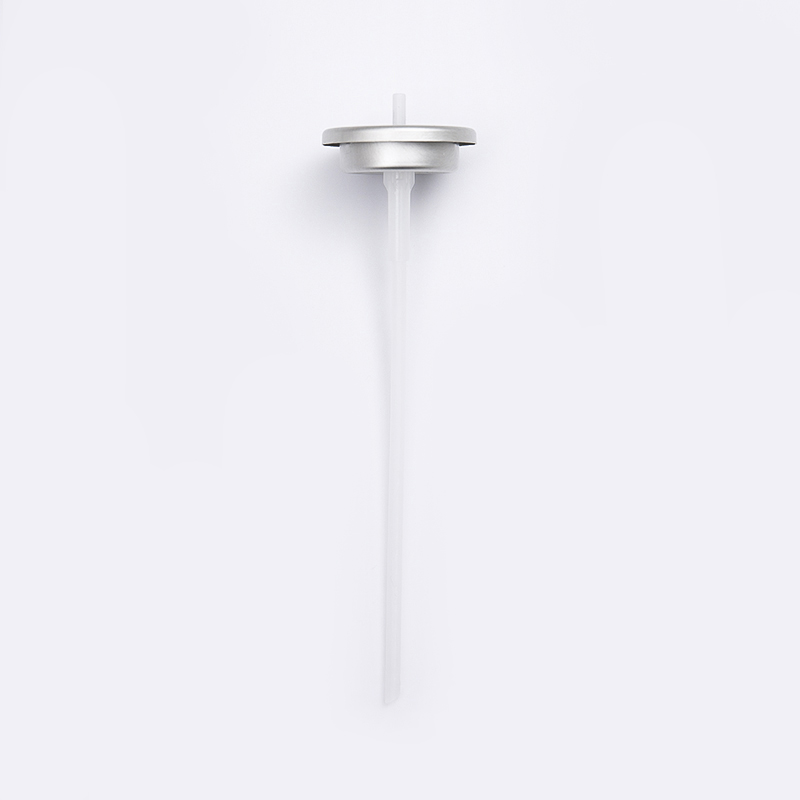
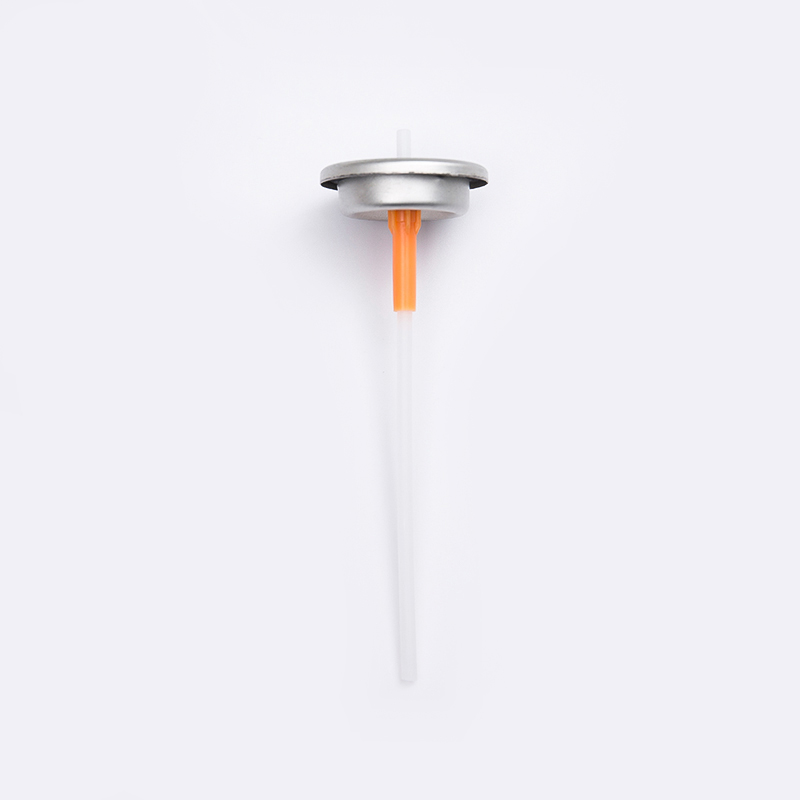
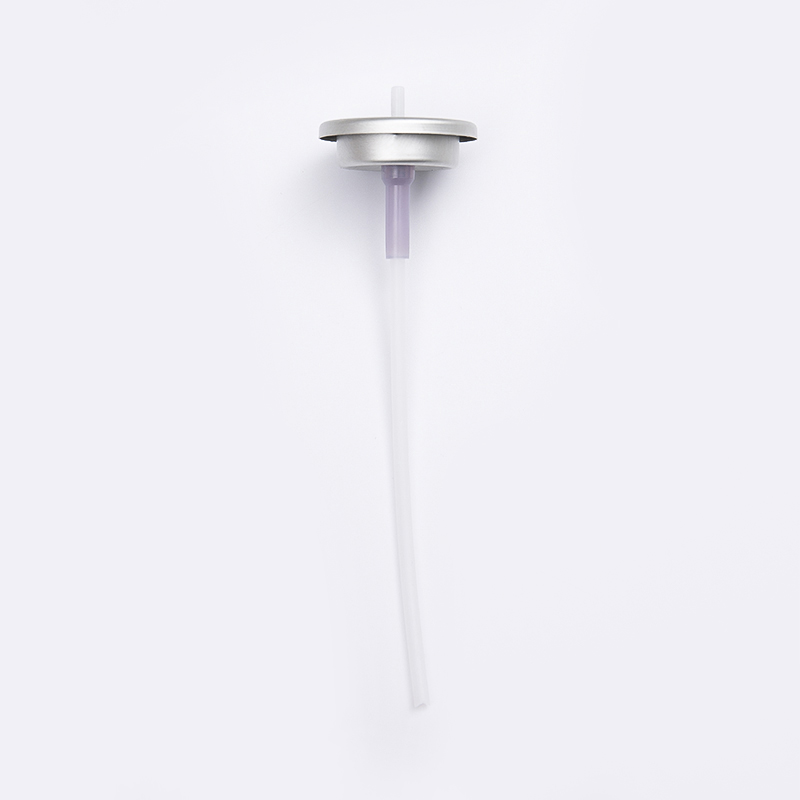
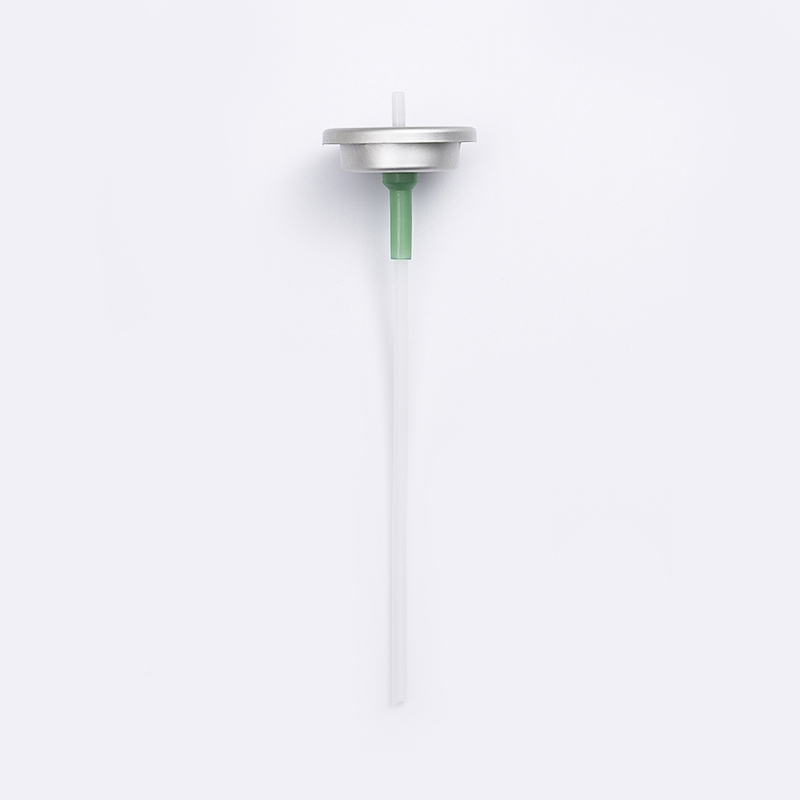
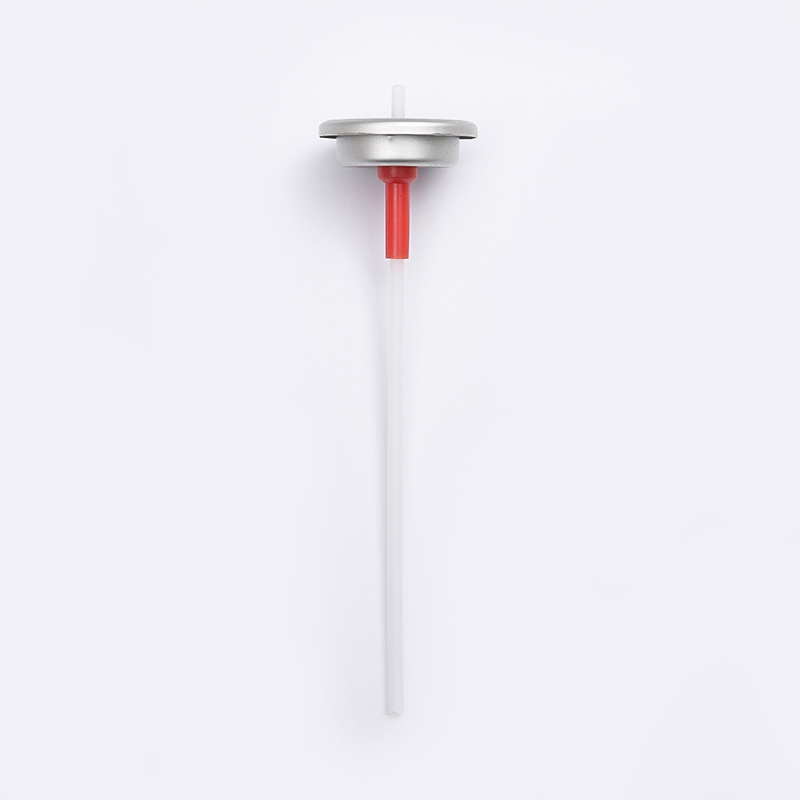
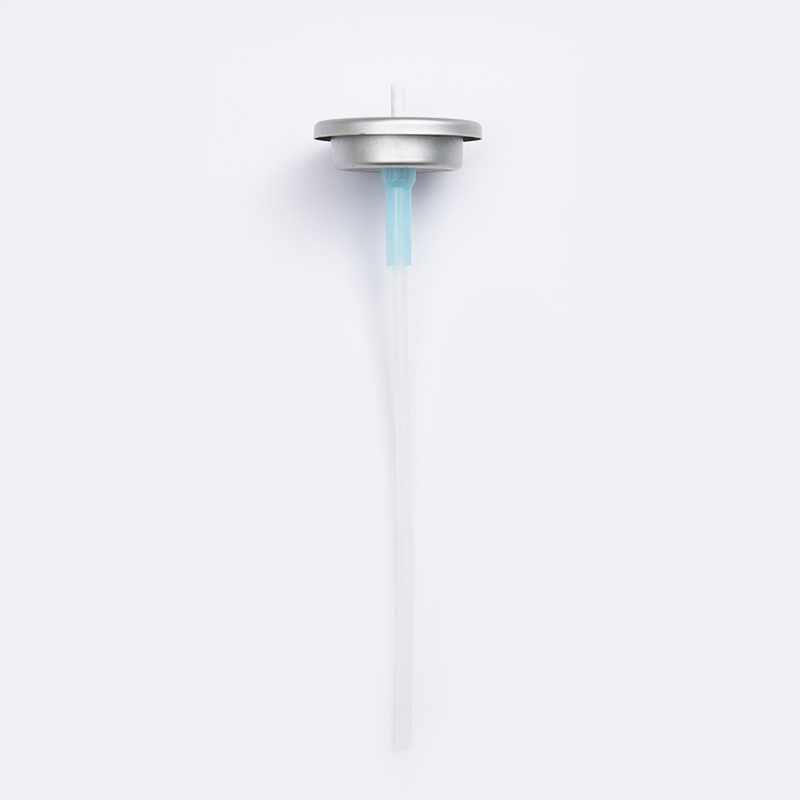
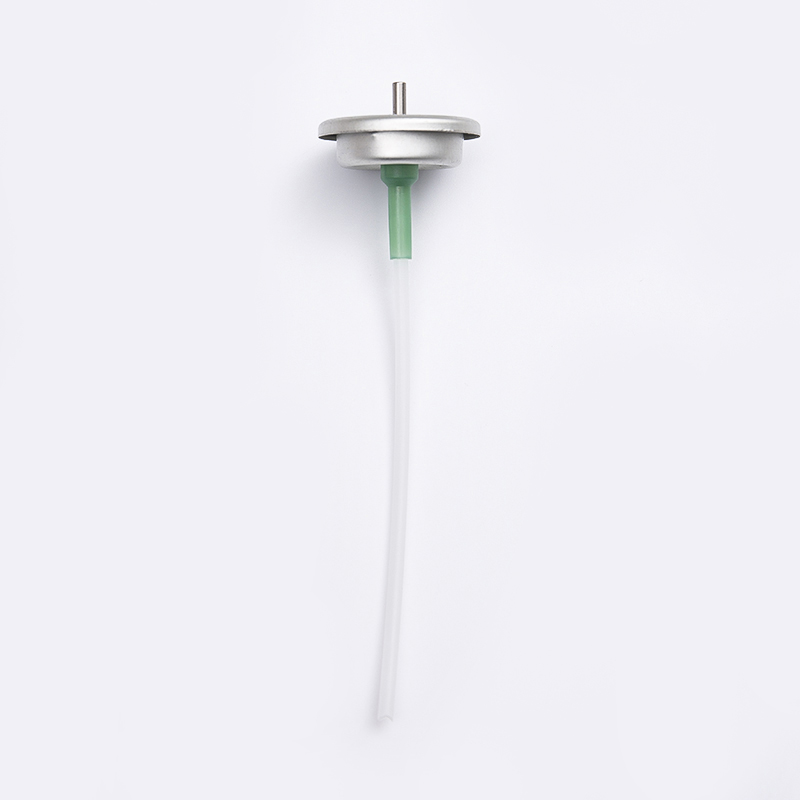
Every metered valve is specified by its nominal dosage. A 1-inch metered dose valve with 100mcl dosage discharges a fixed volume of concentrate per actuation. Dose-to-dose variation matters. For fragrance products, a 10-15% variation is noticeable to consumers. For pharmaceutical products, the tolerance window is much tighter. The valve's internal geometry, stem size, and gasket material determine whether the stated dosage holds over the product's shelf life. A supplier with in-house automatic valve lines can verify this dimensionally before you commit to a full production run. See an example of a 1-inch metered dose valve with 100mcl dosage used for spray bottle applications.
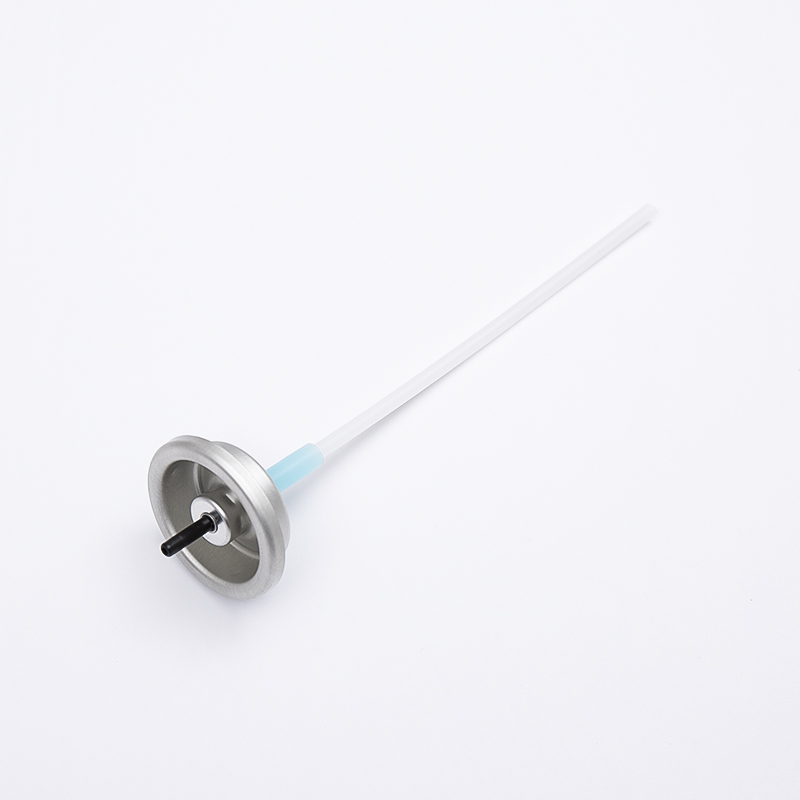 One-Inch Metered Dose Valve with 100mcl Dosage and Plastic/Metal StemThis one-inch metered valve delivers a precise 100mcl dose per actuation, combining a plastic body with a metal stem for durability. Its consistent dosage is critical for fragrance and pharmaceutical applications, making it a reliable choice for spray bottles.View Product →
2. Spray Pattern and Atomization
The actuator converts pressurized liquid into a spray. Its orifice size, swirl chamber geometry, and exit angle control particle size and spray cone width. L-shaped actuators are commonly used for air fresheners and deodorants because they direct spray away from the can and into the room. Circular actuators are preferred for products that need a concentrated, targeted application. The right actuator for a specific product is determined by the desired spray envelope, not by convenience. An example of a purpose-built small-spray L-shaped aerosol actuator for air fresheners shows how a specific nozzle design supports a consistent fine mist.
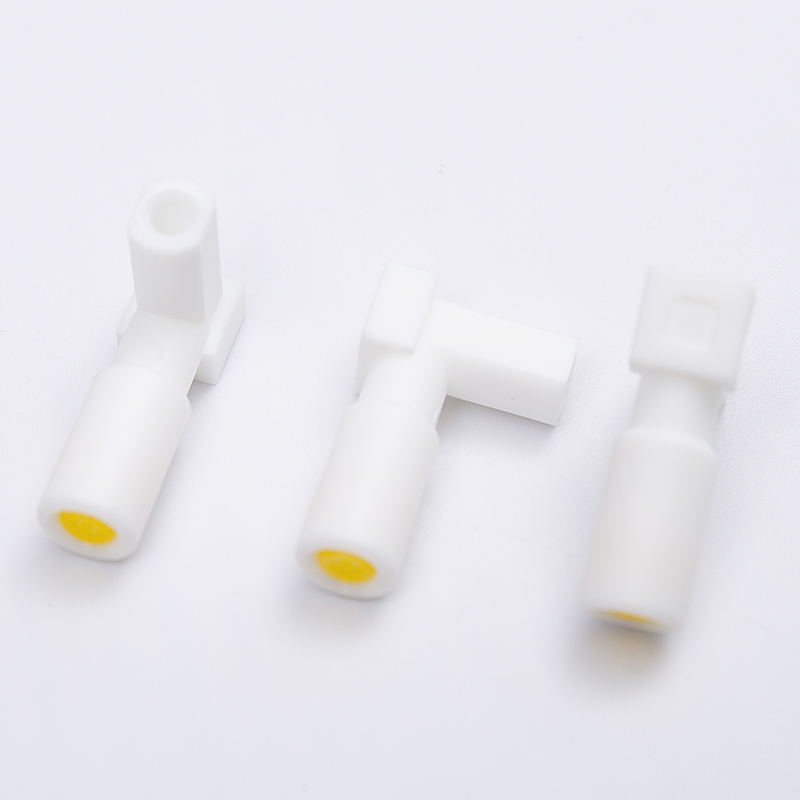 L-Shaped Aerosol Actuator for Air Fresheners with Fine Mist SprayThe L-shaped actuator directs spray away from the can, ideal for air fresheners and deodorants. Its advanced atomization technology produces a fine mist for even distribution, suitable for home, office, and car use.View Product →
3. Material Compatibility with the Formula
Valve components come into direct contact with the concentrate. Gaskets made of Buna-N, EPDM, or neoprene must resist swelling, extraction, and degradation in the presence of solvents. This is especially critical for alcohol-heavy fragrances and water-based systems. A wrong gasket material can cause valve leakage, spray malfunction, or contamination of the formula. Compatibility testing should be conducted at elevated temperatures to accelerate chemical interaction and reveal performance drift.
4. Pressure and Temperature Tolerance
Valve specifications include a maximum working pressure. This is determined by the propellant blend and the temperature range the product will encounter in the supply chain. High-pressure formulas require thicker gaskets and stiffer valve springs. Low-temperature environments can cause propellant performance shifts that alter spray characteristics. If the valve is specified for a narrow pressure band, the product may fail in cold climates or during summer warehouse storage.
5. Actuator Integration and User Experience
Lock mechanisms, dust covers, and spray triggers affect how consumers interact with the product. A deodorant needs a reliable lock that prevents accidental discharge during transport. A car air freshener needs a small actuator that fits inside the vehicle's vent clip system. Actuator integration is a design decision, not an afterthought. It affects consumer perception of product quality and influences repeat purchase behavior.
How to Structure a Valve Supply Partnership
The valve manufacturer you choose becomes an extension of your development team. The right partner brings manufacturing scale, engineering support, and a component catalog that minimizes custom tooling time.
Shanghai Quntong Spray Packing Material Co., Ltd. has manufactured aerosol valves and actuators since 2002. The company operates 10 fully automatic 1-inch valve lines, 4 automatic 20mm valve lines, and 8 fixed-cap assembly lines. This scale means standard valves are available in production quantities without the long lead times associated with new tooling.
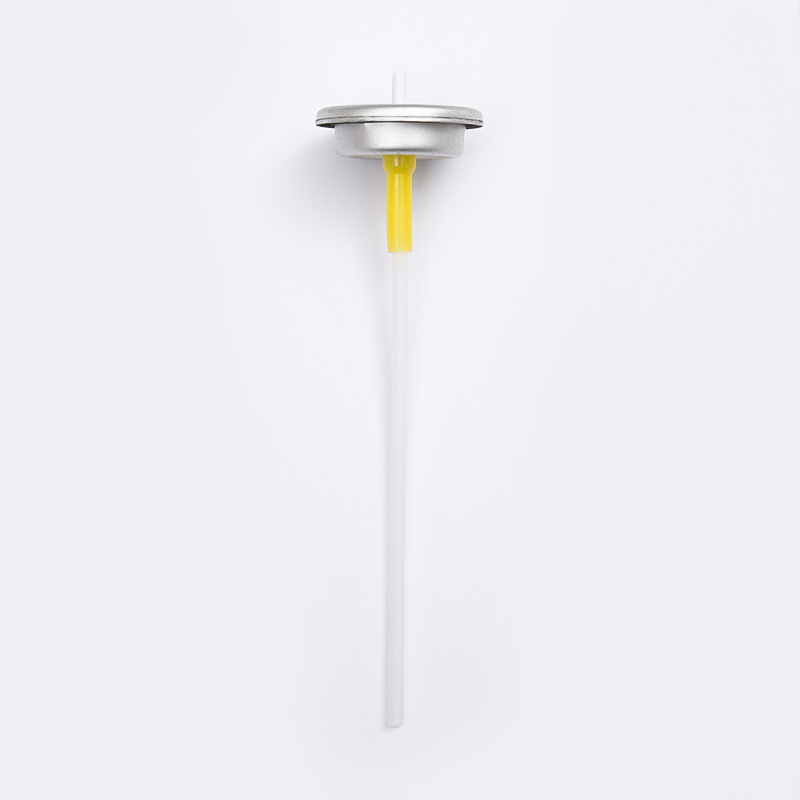
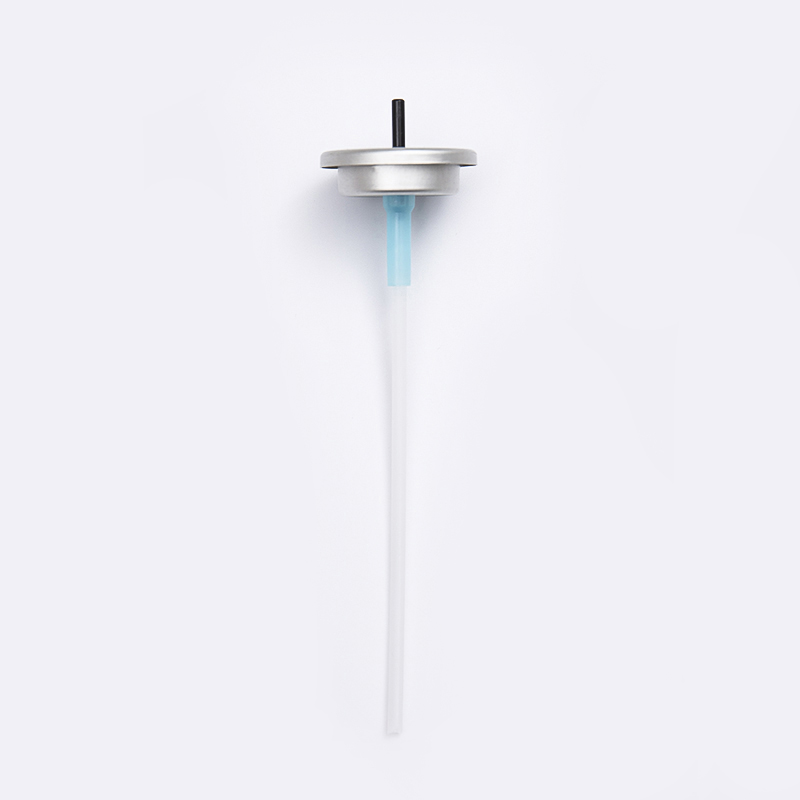
For fragrance products packaged in 20mm aluminum cans, the 20mm fragrance spray valve with 120mcl dosage is a common choice. The 20mm format is compact, lightweight, and widely used in the perfume and personal care market. A manufacturer that offers both 20mm and 1-inch systems gives you flexibility if the container format changes later in the development cycle.
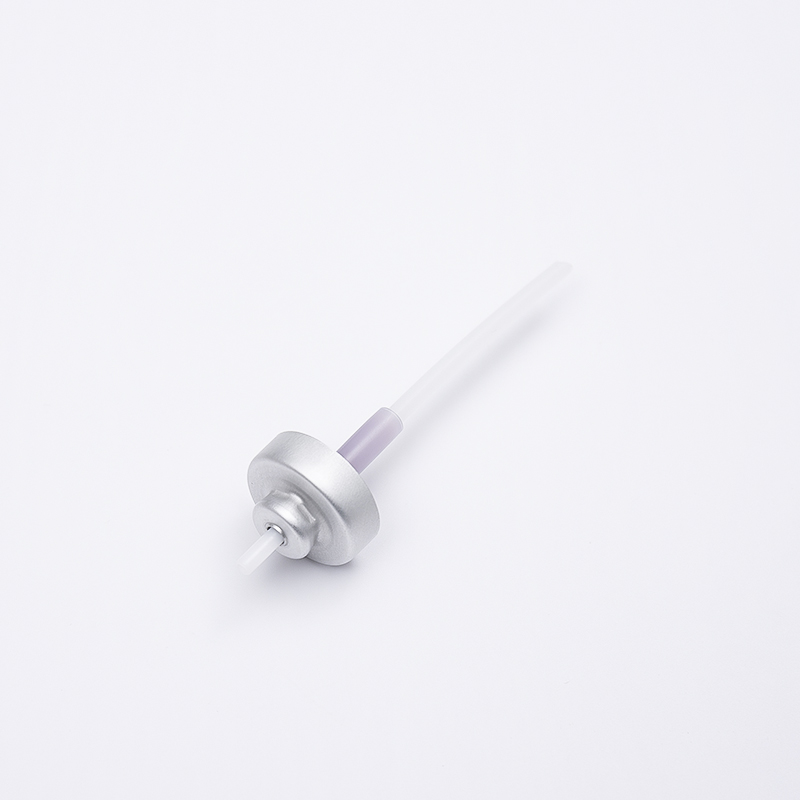 20mm Fragrance Spray Valve with 120mcl Dosage and ActuatorThis 20mm valve and actuator system is designed for perfume aerosol cans, offering a precise 120mcl dosage per spray. Its ergonomic actuator and sealing technology ensure leak-free, consistent fragrance delivery.View Product →
Beyond component supply, a strong valve partner should provide technical guidance on propellant compatibility, dimensional tolerance, and QC requirements. As covered in how to choose the right aerosol valve and actuator manufacturer, evaluation should go beyond unit price to include engineering support, defect management, and delivery reliability.
From Brief to Production: Timeline and Risk Considerations
Development timelines for aerosol products vary significantly. A standard product using existing components can move from brief to production in 6-10 weeks. More complex projects, such as a pharmaceutical inhaler or a fire extinguisher system, take considerably longer.
The typical development path includes these stages:
- Product brief and feasibility review
- Formula and propellant development
- Valve and actuator selection or customization
- Prototype filling and spray testing
- Shelf-life stability and compatibility testing
- Regulatory and safety documentation
- Pilot production runs
- Mass production and QC validation
Three common risks derail aerosol development programs. The first is assuming that a formula can be transferred from one valve to another without revalidation. The second is component supply volatility, when a valve stem or gasket becomes unavailable mid-development. The third is under-testing dimensional tolerance, which causes leaks during pressure filling. Mitigating these risks requires documentation, supplier communication, and early valve selection.
Frequently Asked Questions About Aerosol Product Development
Q1: What is the most important component in aerosol product development?
The valve. It controls dosage, spray characteristics, propellant compatibility, and pressure containment. The valve is the hardware component that is most difficult to change late in development.
Q2: How long does aerosol product development take?
With existing components, 6-10 weeks from brief to production. With custom valve tooling or specialized applications, expect 3-6 months. Regulatory and stability requirements for pharmaceutical or fire safety products extend this further.
Q3: How do I know if a valve is compatible with my formula?
Conduct compatibility testing. Place the valve components in the concentrate and monitor for swelling, weight change, and extractables at elevated temperatures. This is the only way to confirm that gasket and stem materials are compatible.
Q4: What common problems occur during aerosol development?
Valve leakage, inconsistent dosage, spray clogging, pressure loss, and actuator malfunction are the most frequent failures. The root cause is usually a mismatch between formula chemistry and valve materials, or dimensional tolerance variability.