English
 中文简体
中文简体 Español
 عربى
عربى
A brand owner moved a repeat order from a standard 1-inch tinplate can to a slim aluminium can with a 20mm neck and kept the same valve part number. The valves arrived on time, the line started, and the first crimping station stopped. The dose was right, the stem was right, the cup diameter was not.
That is how valve sizing fails in this industry: quietly, at the filling line, after the purchase order is signed. The short answer comes first.
Valve size is three numbers, not one. The cup diameter must match the can opening, either 1 inch or 20mm. The stem diameter must match the actuator socket, with 2.80mm as the working standard and a 4.60mm core series for higher flow. The dose chamber decides how much product leaves the can per actuation, from 25 to 200 mcl.
The sizing questions below come from the enquiries we handle every week at Shanghai Quntong Spray Packing Material Co., Ltd., where aerosol valves have been built in Pudong, Shanghai since 2002 on ten 1-inch automatic valve lines, four 20mm lines and eight cap press-fit lines.
The Three Numbers Behind "Valve Size"
In a specification, size never stands alone. It resolves into three dimensions, and each one locks a different part of the package.
- Cup (ferrule) diameter - 1 inch, or 25.4mm nominal, or 20mm. It is fixed by the can opening and bead, and it is the first dimension a crimper feels.
- Stem (spout) diameter - 2.80mm on most metered valves, with a 4.60mm plastic core series for higher flow. It is fixed by the actuator socket.
- Metered dose chamber - 25, 35, 50, 75, 100, 120, 150 or 200 mcl. It is fixed by how much product one press should release.
Two further choices behave like sizes and should be settled at the same time: the dip tube, in length and bore, and the gasket elastomer. Neither changes the nominal size, but either can stop a run that looks correctly sized on paper.
One distinction comes before all of this. Continuous valves have no metered dose, so their size question stops at the cup and the stem. Metered valves, the ones behind air fresheners, perfume, deodorant, insecticides and metered dose inhalers, need all three numbers.
Internal codes such as D1S2-8 are part numbers, not dimensions. Before comparing quotations, ask for the cup diameter in millimetres, the stem diameter in millimetres and the dose in mcl.
1-Inch or 20mm: The Cup Diameter Decision
| Valve family | Nominal cup diameter | Can opening it fits | Doses available | Cup material |
|---|---|---|---|---|
| 1-inch metered valve, 2.80mm stem | 1 inch / 25.4 mm | Standard 1-inch can bead | 25, 75, 100, 120, 150, 200 mcl | Aluminium or tinplate |
| 20mm metered valve, 2.80mm stem | 20 mm | 20mm-neck aluminium cans | 35, 50, 75, 100, 120, 150, 200 mcl | Aluminium |
| 1-inch fire extinguisher valve | 1 inch / 25.4 mm | Standard 1-inch can bead | Continuous discharge, not metered | Aluminium or tinplate |
The rule that follows is unforgiving: the cup must match the can. A 1-inch valve cannot be crimped onto a 20mm neck, and a 20mm valve cannot be expanded onto a 1-inch bead. Gaskets, adapters and crimper adjustments do not bridge that gap.
So the can decides the platform. Standard 45mm to 66mm tinplate or aluminium cans put you in 1-inch, where the choice of doses, cup materials, actuators and caps is widest. Slim cans, samplers and travel-size air care with a 20mm opening put you in 20mm, where the range is narrower: fewer cup materials, fewer accessory combinations and a higher practical floor on fill volume.
Cup material is a separate decision that arrives on the same quotation line. A tinplate cup and an aluminium cup of the same nominal diameter are different part numbers with different weights, prices and behaviour in aggressive formulations, so choose the material when you choose the dose, not afterwards.
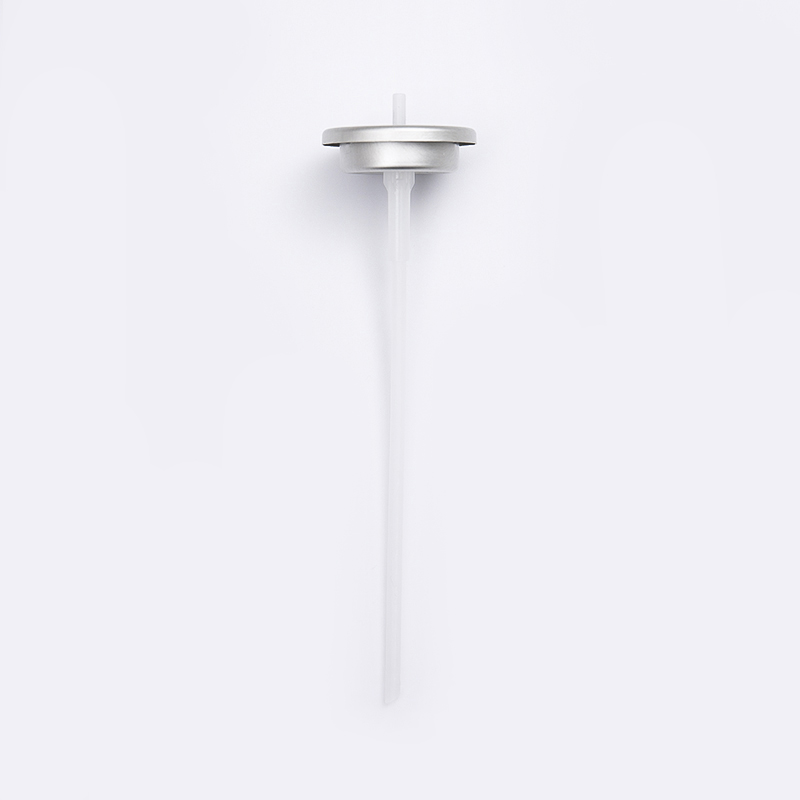
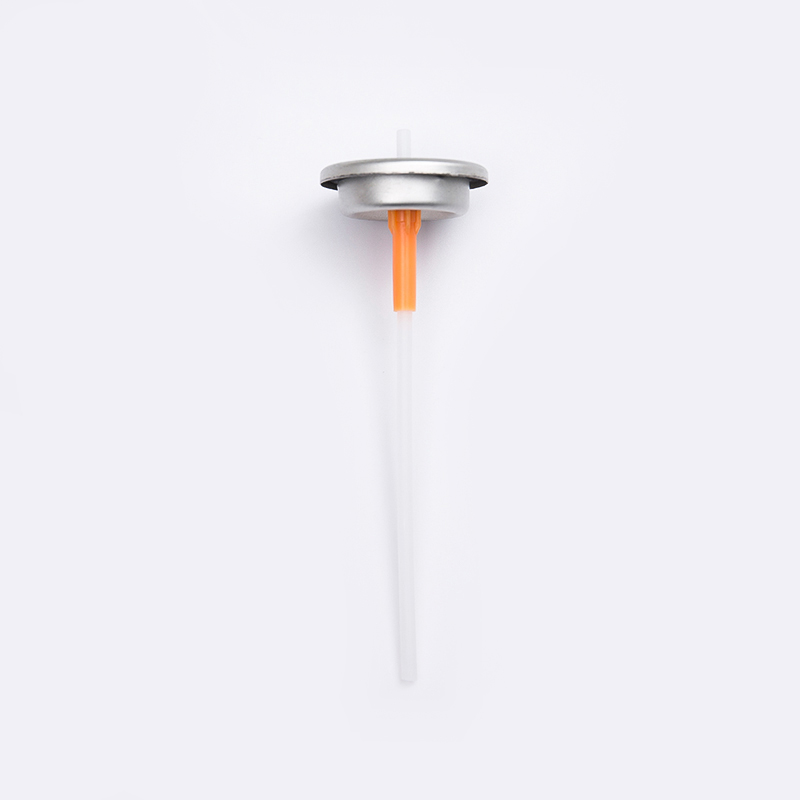
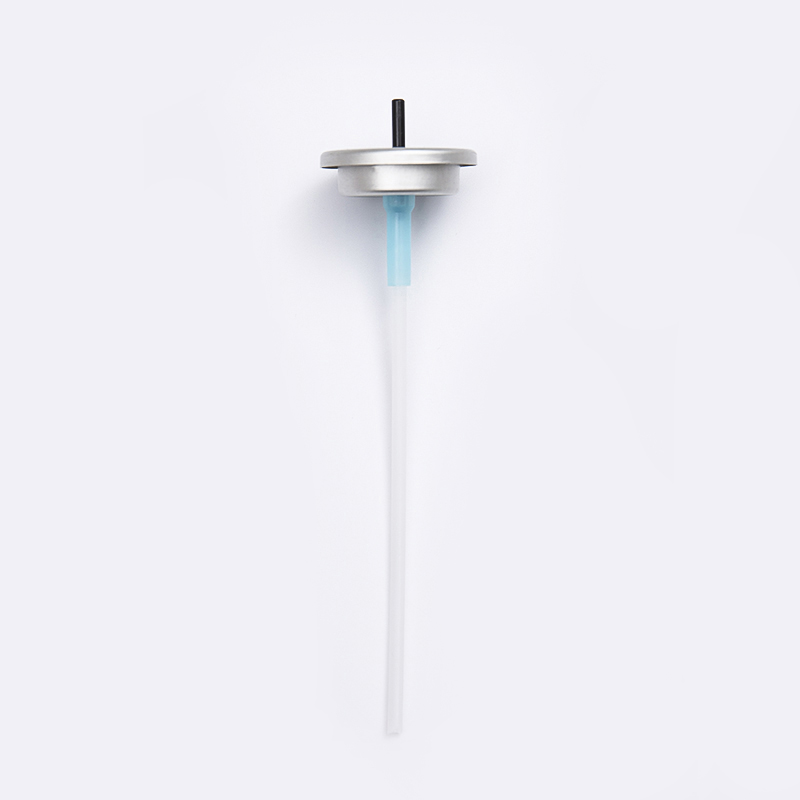
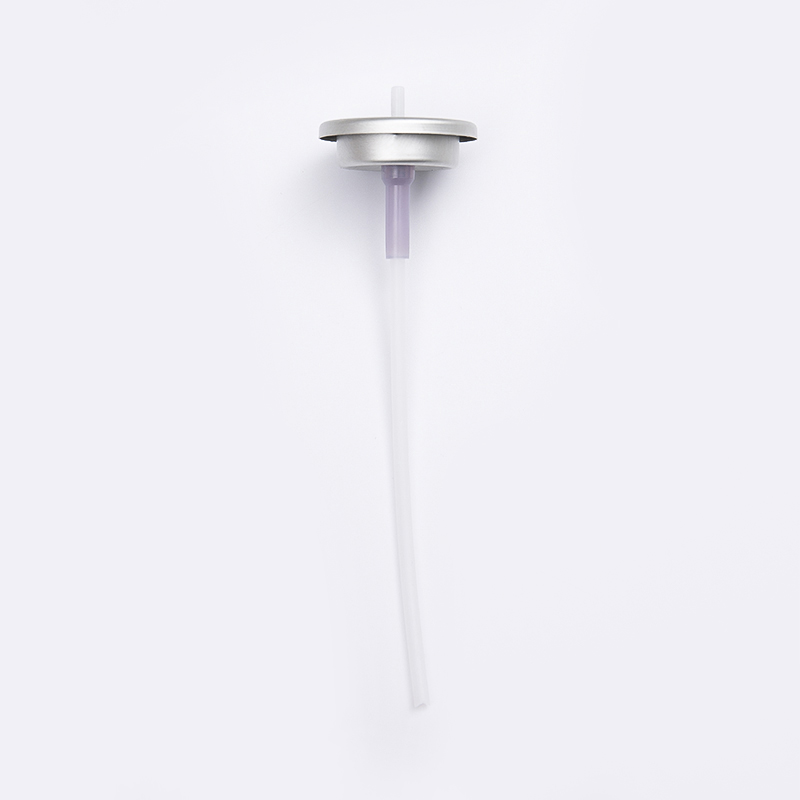
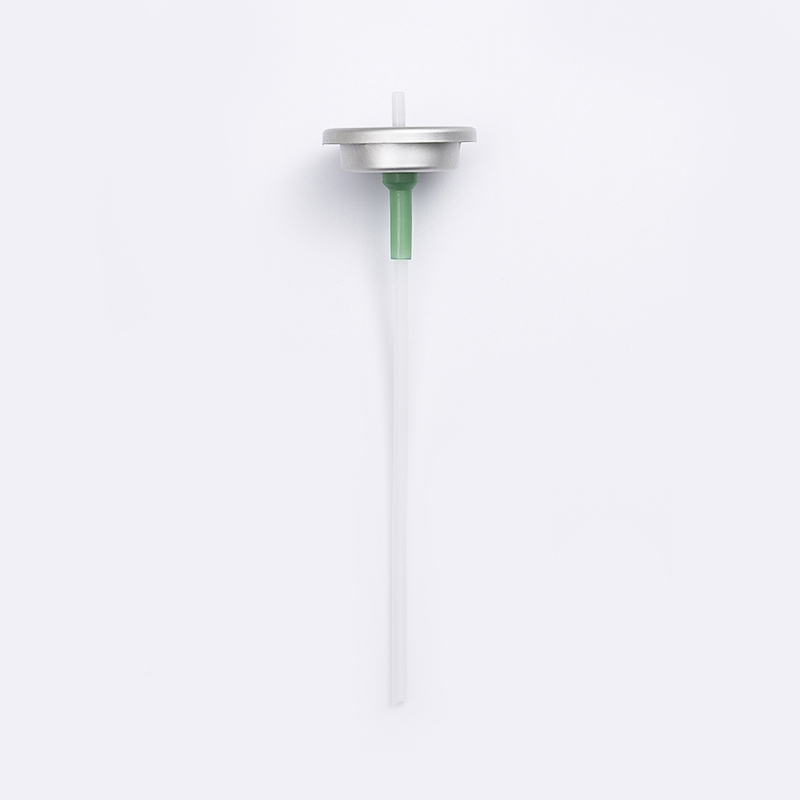
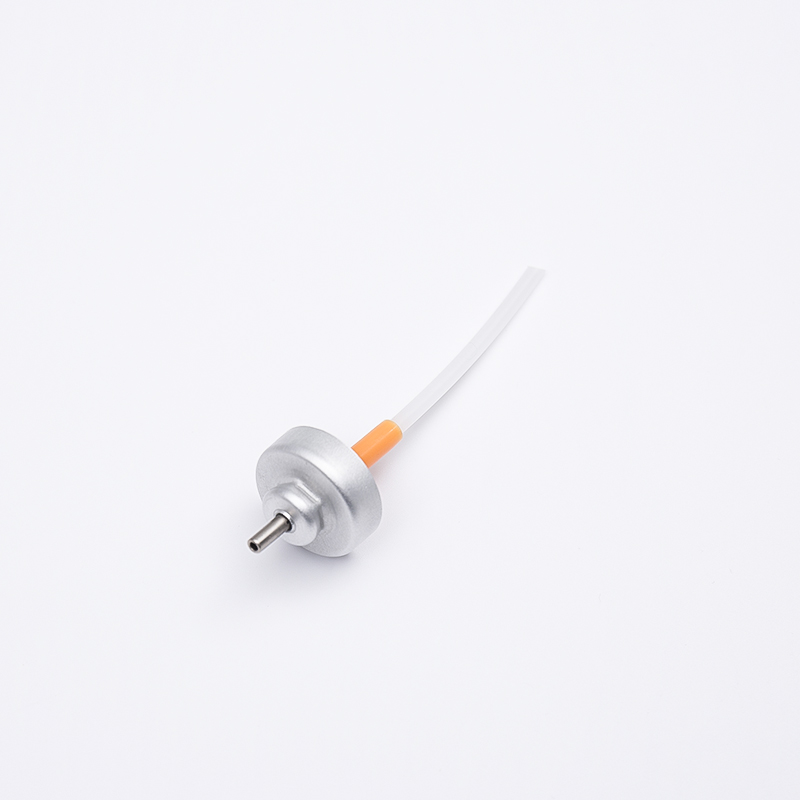 D20T2.8 20mm 35mcl Metered Aerosol Valve with Metal StemA 20mm aerosol metering valve with a 35mcl dose and metal stem; suited to projects specifying dose, cup material and matching 2.80mm stem.View Product →
Stem Diameter and Stem Material
Stem diameter is where valve sizing meets actuator sizing, and a mismatch here is expensive because both parts are already moulded. 2.80mm is the working standard across 1-inch and 20mm metered valves, and the L-series and C-series actuators in our catalogue are moulded to fit it. The 4.60mm plastic core series covers higher-flow projects, and those projects must specify the actuator at the same time, because a 2.80mm socket will not grip a 4.60mm stem.
Plastic or metal stem
Metal stems hold their form through high actuation counts and are the safer starting point when a concentrate is aggressive toward polymers. Plastic stems in PP or PE are lighter, lower cost and the default for most water-based and alcohol-based air care, fragrance and personal care products. In most projects the diameter stays 2.80mm either way, so this decision rarely forces a new actuator, but it always has to be made together with the gasket elastomer, because the two seal against each other.
What a wrong fit looks like in the field
- Actuator wobble and seepage at the stem joint
- Dose drift across a batch as the seal ages
- Inconsistent press feel that consumers report as stiff or sloppy
Metered Dose Sizes in mcl and What They Deliver
mcl is the trade shorthand for microlitre. One thousand mcl is 1 mL, so a 100 mcl valve delivers 0.1 mL per actuation and a 150 mcl valve delivers 0.15 mL. Converting to millilitres early prevents most quotation disputes.
A sanity check worth running before you order: divide usable fill volume by the dose. A 150 mcl valve on a 200 mL fill gives roughly 1,300 actuations, less residue. If the label promises 1,500 sprays from a 150 mL can, the arithmetic does not work. If it promises 500, you may be paying for precision the product does not need.
| Dose in mcl | Equivalent volume | Typical applications |
|---|---|---|
| 25 | 0.025 mL | Fragrance samplers, low-dose personal care |
| 35 | 0.035 mL | Compact 20mm air care, travel fragrance |
| 50 | 0.05 mL | Travel fragrance, small metered doses |
| 75 | 0.075 mL | Air freshener bursts, perfume |
| 100 | 0.1 mL | Deodorant, general air care default |
| 120 | 0.12 mL | Air care refills, insecticide |
| 150 | 0.15 mL | Air care refills, fragrance, insecticide |
| 200 | 0.2 mL | High-dose air care for larger spaces |
Dose tolerance is a project decision rather than a catalogue number. Suppliers commonly work with a figure around 10 percent across the life of the can, and the spread widens as the can empties and pressure falls. Write the tolerance and the test method into the specification, measured as weight per actuation, averaged over a defined number of shots, at defined temperatures, then verify it on the real formulation. The mechanics behind that spread are covered in this note on how metered valves hold a dose across a production run.
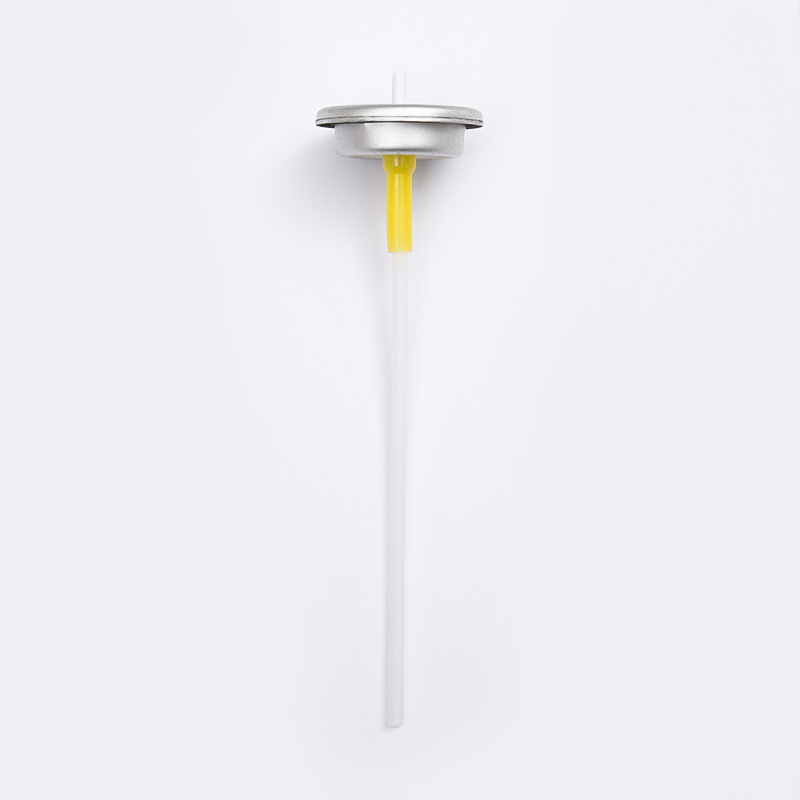
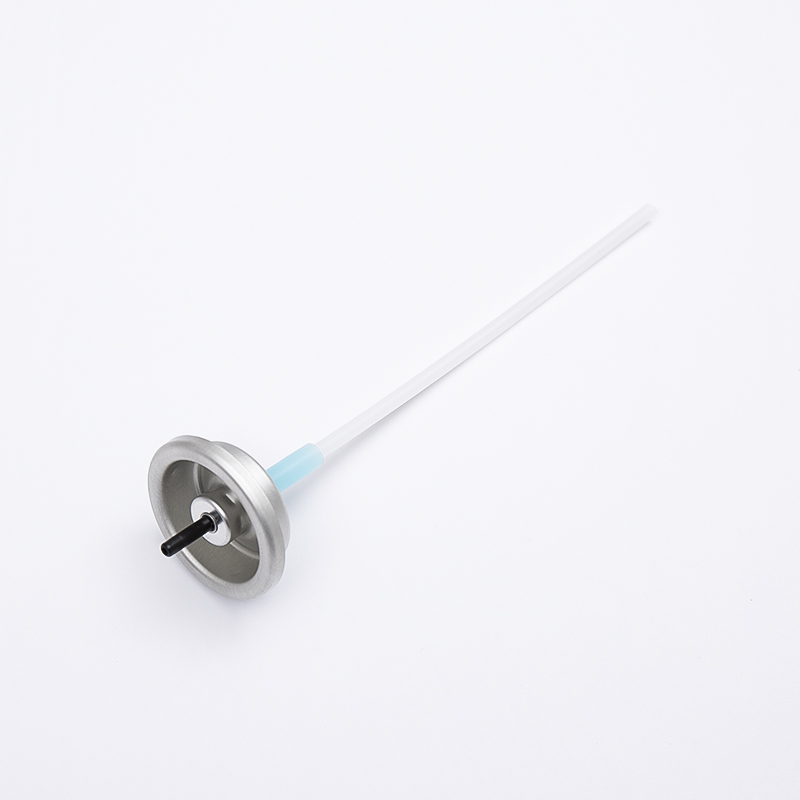 D1S2.8 One-Inch 100mcl Plastic/Metal Stem Metered Dose Spray ValveOne-inch metered valve delivering 100mcl per spray with plastic body and metal stem; consider where dose tolerance and consistent dispensing are specified.View Product →
Special Valve Families and Their Own Sizing Rules
Three families sit outside standard metered valve logic, and they are usually where size guides go quiet.
Fire extinguisher valves
These are built on 1-inch cups in aluminium or tinplate, with the letter M in the part number marking the family. They are not specified in mcl. What matters is the discharge path, the rate at which powder or liquid leaves the can, and the storage pressure the unit will see. Specify the medium, the target discharge time and the temperature range, and the valve plus its L-shaped nozzle are matched to those figures.
Bag-on-valve, or BOV
A 1-inch valve with a bag welded to the tail, usually with a tinplate cup for aluminium cans. The can opening rules are identical to any other 1-inch valve, but the bag governs usable fill and keeps product and propellant apart, which suits gels, foams and formulations that must not meet the propellant.
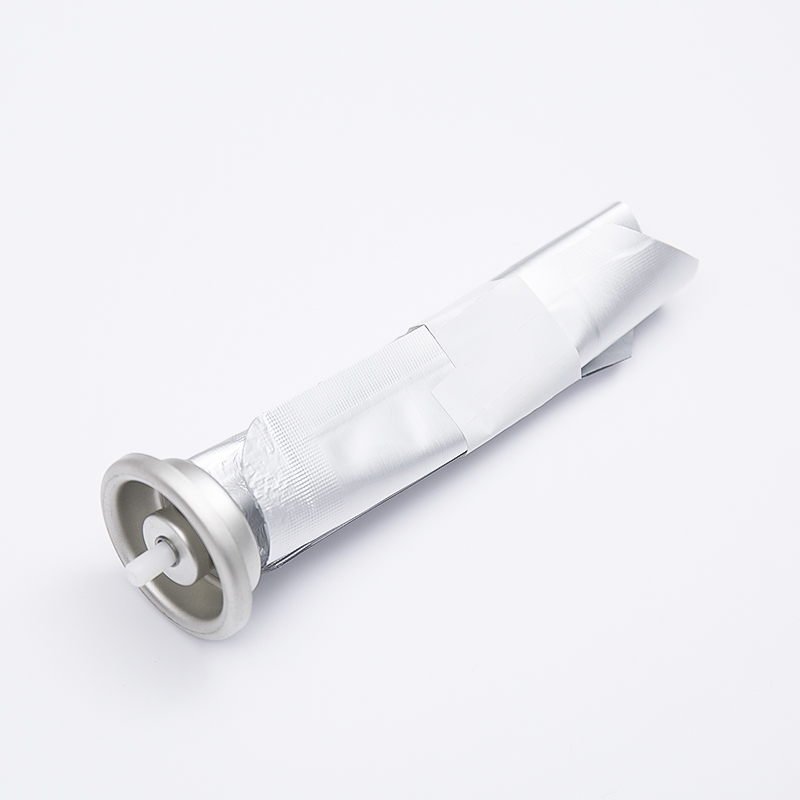 BOV-S4.00 Bag-on-Valve Aerosol Valve with Tinplate CupOne-inch bag-on-valve assembly with tinplate cup for aluminium cans; keeps product and propellant separate for gels, foams and demanding formulations.View Product →
Cassette and barbecue stove valves
KT41 portable butane stove valves and KT43 barbecue stove valves with a gold cup do not crimp to an aerosol can opening at all; they connect to a gas canister. The cup diameter rules in this guide do not apply, but thread, sealing face and flow rate do, so treat them as a separate specification with its own drawing.
Crimping, Gaskets and Tolerance: Where Sizing Goes Wrong
Correctly sized parts can still fail at the joint, because the valve cup and the can bead form one seal and the crimper must be set for the exact combination in front of it.
- Crimp diameter and depth - a cup that measures correctly still leaks if crimp depth is off. Check both against the can maker's bead drawing, not against the last order.
- Gasket elastomer - a valve that passes a water leak test can swell or harden in a solvent-based concentrate. Agree the gasket together with the formulation and the propellant.
- Dip tube - long enough to reach the bottom without coiling against the wall. Too short leaves product behind, too long can kink or block.
- Leak test window - a 24-hour check at the highest expected storage temperature costs almost nothing and filters out most crimping faults before a full run.
The real commercial risk is not the unit price of valves. It is a stopped filling line, a rejected batch and a delayed launch, and a sample order of 20 to 50 valves crimped on your own cans with your own concentrate removes most of that risk for the price of a courier parcel.
A Sizing Checklist Before You Order
- Can opening diameter and bead drawing, in millimetres
- Cup material: aluminium or tinplate
- Target dose in mcl and in mL, with an agreed tolerance and test method
- Stem diameter and material, matched to the actuator part number
- Dip tube length against can height plus valve tail
- Gasket elastomer against concentrate and propellant
- Actuator and cap part numbers, plus expected spray pattern or discharge rate
- A sample trial with crimp, 24-hour leak test and dose check before the production order
Frequently Asked Questions on Valve Sizing
Q1: What does 1 inch mean on an aerosol valve?
It is the nominal cup diameter, 25.4mm. In practice the dimension that matters is the crimp area that matches the can opening and bead, so a 1-inch valve always has to be checked against the can drawing rather than against the name alone.
Q2: Can I use a 1-inch valve on a 20mm can?
No. The cup has to match the can opening, and the difference is a physical gap, not a crimper setting. If the cans have a 20mm neck, the whole specification, dose, stem and actuator, is built around the 20mm platform.
Q3: Is mcl the same as microlitre?
Yes. 1,000 mcl equals 1 mL, so a 150 mcl metered valve releases 0.15 mL per actuation. Converting to millilitres early makes it easy to compare fill volume, dose and the number of actuations promised on the label.
Q4: Does valve size change the spray pattern?
Not directly. Spray pattern and particle size come from the actuator and its orifice, not from the dose chamber. Size the valve for dose and fit, size the actuator for the spray you want, and decide both together for different reasons.
Getting the Size Right the First Time
Send the can drawing, the target dose in mcl, the actuator you plan to use and the formulation type. We will confirm cup diameter, stem diameter, cup material, gasket and dip tube length before anything is tooled, and because standard combinations run on ten 1-inch automatic valve lines and four 20mm lines, samples usually leave Pudong within days rather than weeks.
Order 20 to 50 valves in the dose you are considering, crimp them on your own cans, and measure the dose after 24 hours and again after one week. If the numbers hold, scale up with confidence. If they do not, you have lost a courier fee instead of a launch date.
Share your can specification and dose target through the inquiry form and our engineering team will come back with a matched valve, actuator and cap set for review.