English
 中文简体
 Español
 عربى

Most failures on small aluminum aerosol packs are specification failures, not design failures. A crimp dimension drifts by a few hundredths of a millimeter, an elastomer swells in a solvent-heavy concentrate, or the metering chamber releases more than the dose printed on the label. None of those issues appears on a drawing; all of them appear on the filling line or in consumer complaints.
The conclusion first: a correct 20 mm aerosol valve specification is a package of three decisions made in parallel - the mechanical fit between the mounting cup and the can neck, the metered dose and its tolerance, and the materials that contact the concentrate. Cover those three, and the valve stops being a variable in your process.
As a 20 mm aerosol valve manufacturer that has run dedicated automatic 20 mm lines for more than two decades, we have seen which specification points prevent the most trouble downstream. This guide keeps the same order: fit, dose, then materials.
What "20 mm" Means in an Aerosol Valve Specification
In a specification sheet, 20 mm refers to the diameter of the mounting cup, the metal cap that is crimped onto the neck of the aerosol can. It is the standard interface for small aluminum cans in Europe and Asia and the most common format for fragrance, air freshener, deodorant, and personal care packaging. A 1-inch valve (25.4 mm), by contrast, dominates tinplate cans and larger aluminum diameters.
| Specification item | 20 mm valve | 1-inch valve |
|---|---|---|
| Mounting cup diameter | 20 mm | 25.4 mm (1 inch) |
| Typical container | Small aluminum can, 20 mm neck | Tinplate or larger aluminum can |
| Common dosage range | 35-200 mcl | 25-200 mcl or higher |
| Typical products | Fragrance, air freshener, personal care | Household, industrial, fire extinguisher, bag-on-valve |
The format choice is usually made by the can, not by the valve. If your line is built around 20 mm neck aluminum cans, you are locked into a 20 mm cup; the practical specification work then moves to stem material, cup finish, and metered dose.
Key rule: choose the valve format from the can neck, then optimize dose and materials within that format.
Core 20 mm Aerosol Valve Specifications
Stem material: plastic or metal
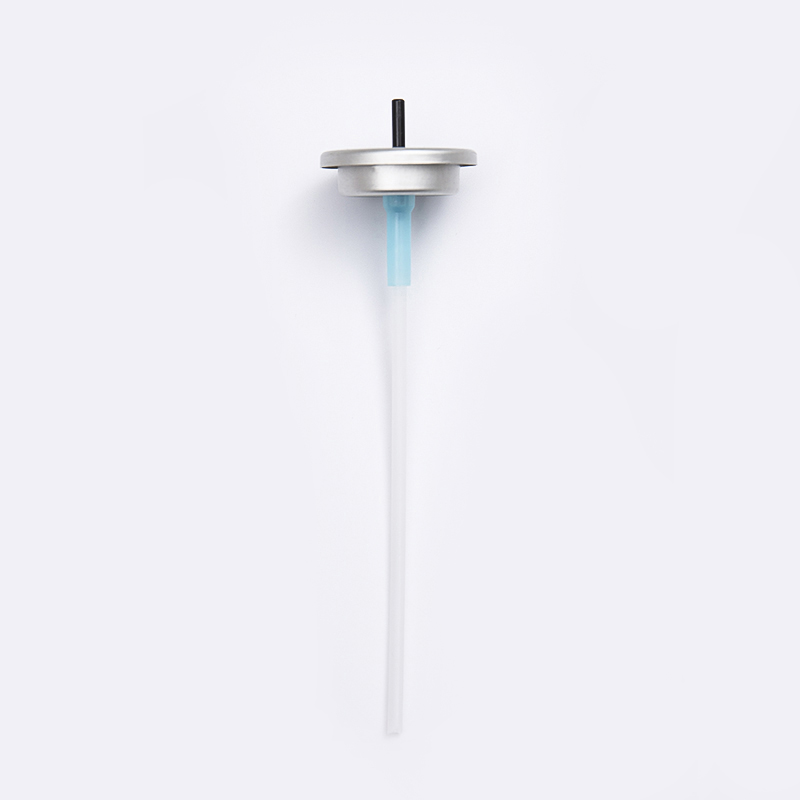
The stem is the moving part that carries the metering orifice. Plastic stems, normally PP or PE, dominate air freshener and personal care duty because they are dimensionally stable, economical, and light. Metal stems are chosen when stiffness, tighter tolerance, or resistance to aggressive solvents matters, and they are the preferred premium option for fine perfumery and certain pharmaceutical-style sprays. The same 20 mm dosage platform is often offered in both stem materials, so the spray behavior can be tuned without changing the can interface.
Metered dosage and delivery volume
Metered dose is the volume delivered with each actuation, expressed in microliters. Standard 20 mm metered valves are offered from 35 to 200 mcl; the right value is driven by the formulation strength and the label claim. A concentrated fine fragrance may need only 35-50 mcl per spray, while a room air freshener usually works better with 100-150 mcl for an immediate scent impression.
- Dose range 35-200 mcl
- Aluminum cup, 20 mm
- Plastic or metal stem
| Dose per actuation (mcl) | Typical application |
|---|---|
| 35-50 mcl | Fine fragrance, precise personal care metering |
| 75-100 mcl | Air freshener, deodorant, general spray |
| 120-150 mcl | Air freshener, room care, larger-area spray |
| 150-200 mcl | Deodorant, multi-purpose household spray |
Dose accuracy is fixed by the metering chamber volume, which is determined by valve geometry. Once the dose is chosen on paper, the actual delivered amount must be verified on a finished can, because the crimped position shifts the internal seal slightly.
For a widely used 75 mcl configuration with an aluminum cup, the full technical file is below. The same platform also runs at 50, 100, 120, 150, and 200 mcl, so a dose change does not require a new can interface.
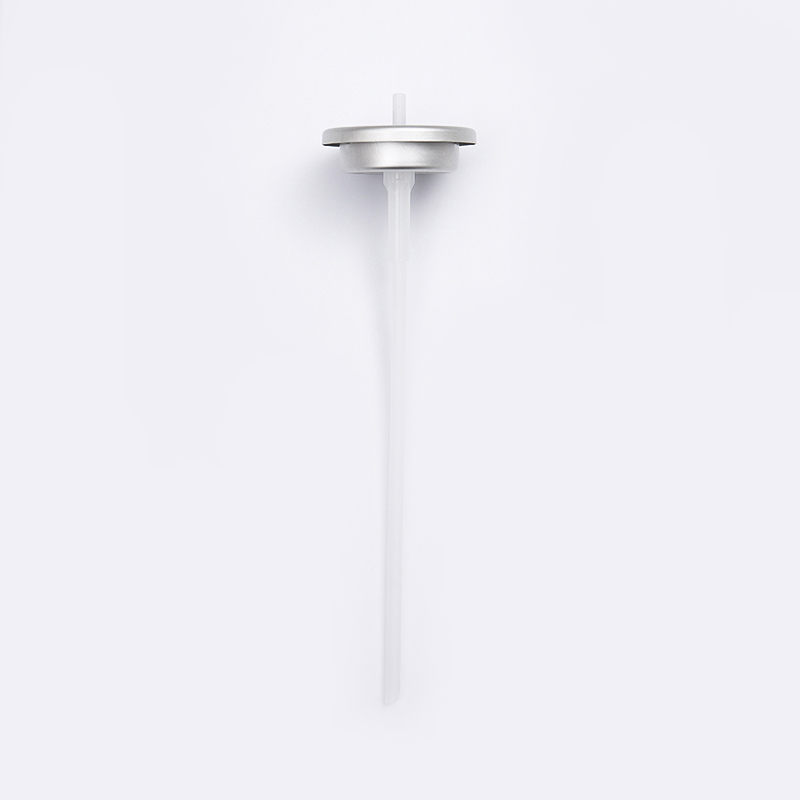
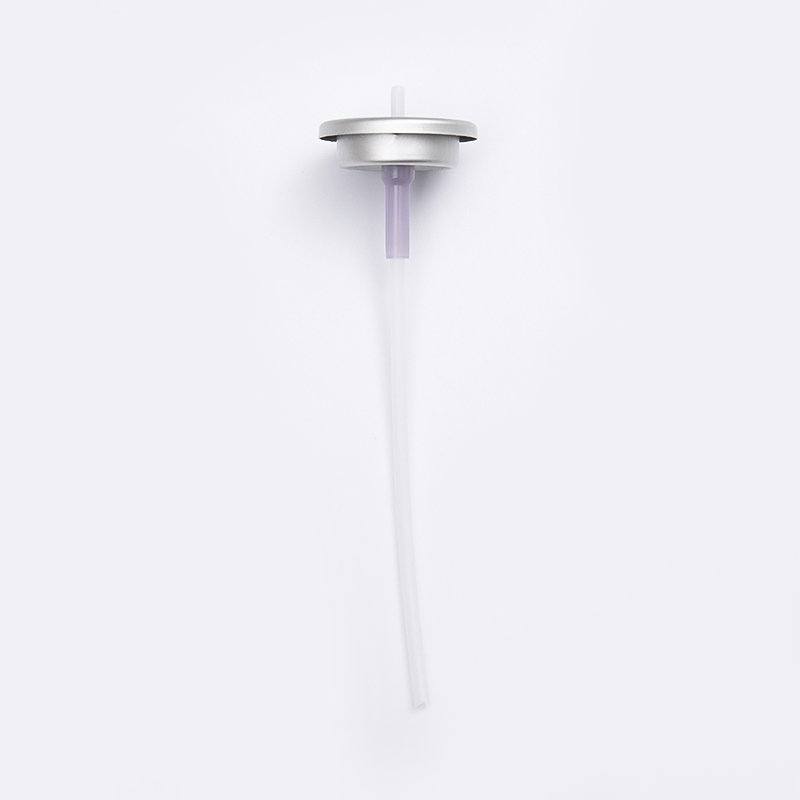
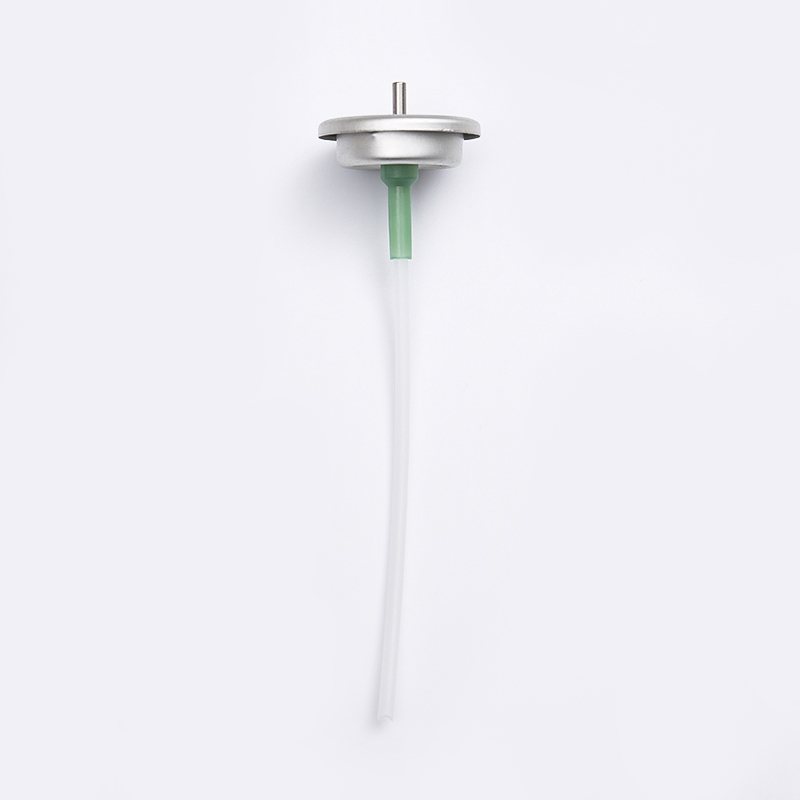
 D20S2.8 75 mcl 20 mm Aerosol Metered Valve with Aluminum CupThis 20 mm metered valve delivers a precise 75 mcl dose using an aluminum cup. It suits applications needing consistent spray volume, with the same platform adaptable to other doses without changing the can interface.View Product →
How Metering Precision and Spray Performance Are Controlled
Metering happens inside the valve core. At rest, the metering chamber is sealed; when the actuator is pressed, stem travel closes the dip tube path and traps a defined volume, which becomes the dose. Chamber dimensions, gasket compression, and stem travel all contribute to actuation-to-actuation repeatability.
This is why crimp quality matters as much as the valve drawing. Because chamber geometry moves with the final crimped position, quality-control procedures for 20 mm valve crimping - now covered in dedicated patent literature - measure crimp diameter, crimp depth, and gasket compression. A valve specified for 100 mcl can deliver 102 or 98 mcl depending on how the cup is seated. Ask your supplier for the crimp window in millimeters, not for a general statement that the joint will be tight.
Spray performance is then tuned by the actuator. Once the dose is controlled, the spray cone, particle size, and wetness come from nozzle geometry. On 20 mm metered valves, L-shaped actuators give the fine mist typical of air fresheners and perfumes, while circular actuators suit broader coverage. Matching a precise valve to the right actuator decides the feel of the product.
Matching a 20 mm Valve to Your Application
Air freshener and air care
Air freshener concentrates are volatile by design, so the specification emphasis falls on sealing, dose repeatability, and spray quality. A 100-150 mcl dose with an L-shaped, leakproof actuator is a proven formula. The 120 mcl air freshener metering valve below mates with standard 20 mm aluminum cans and keeps delivery consistent from the first to the last actuation.
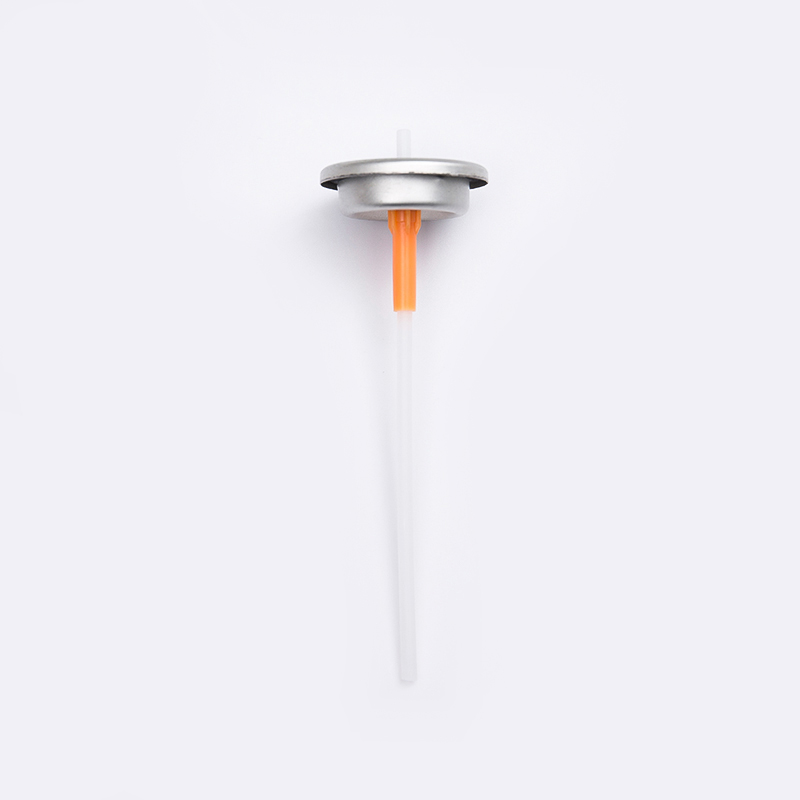
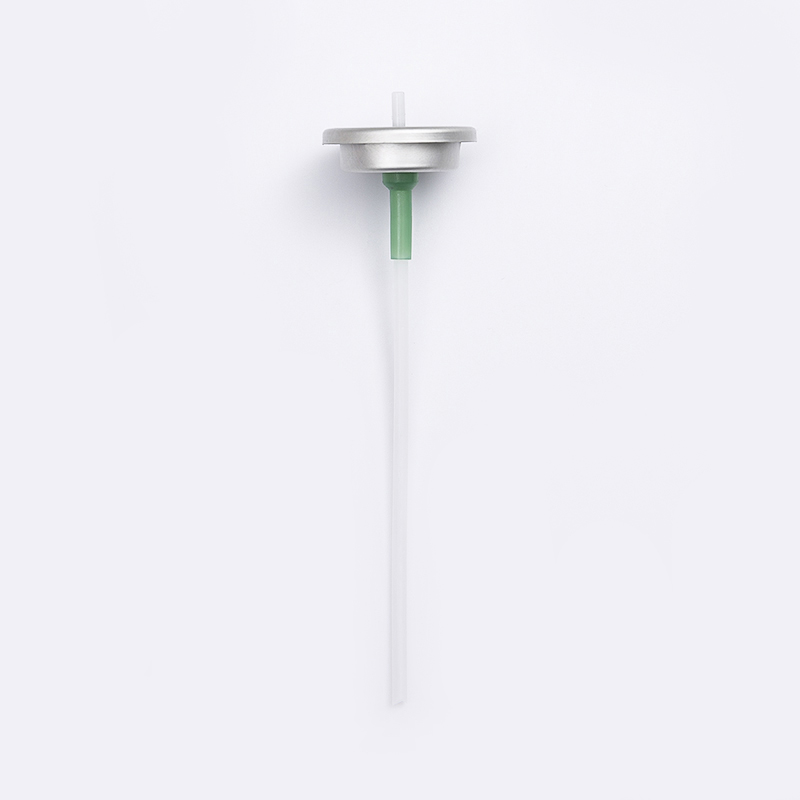
 D20T2.8 120 mcl 20 mm Metering Valve for Air FreshenersDesigned for air freshener systems, this 20 mm valve releases a consistent 120 mcl per actuation. Its corrosion-resistant materials and leak-preventing structure ensure reliable performance across repeated use.View Product →
Fragrance and personal care
Fine fragrance demands the opposite discipline: a small, repeatable dose to control strength and a stem-and-cup combination that resists ethanol and perfume oils. Metal-stem valves in the 35-75 mcl range give stable long-term performance, while plastic stems keep cost down in deodorants and body sprays. The 120 mcl fragrance format below shows the compact layout typical of premium slim cans.
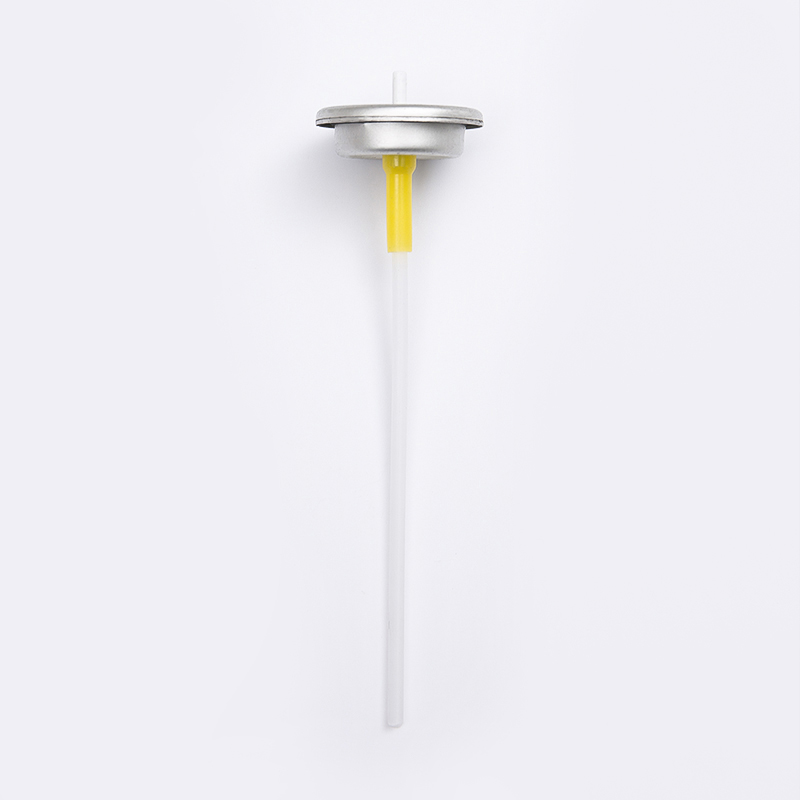
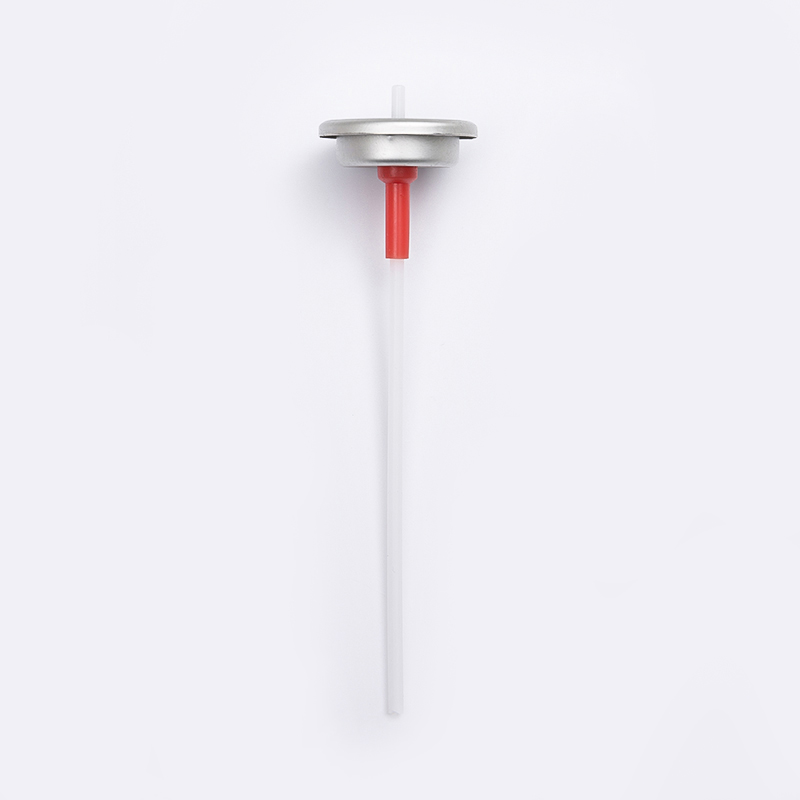
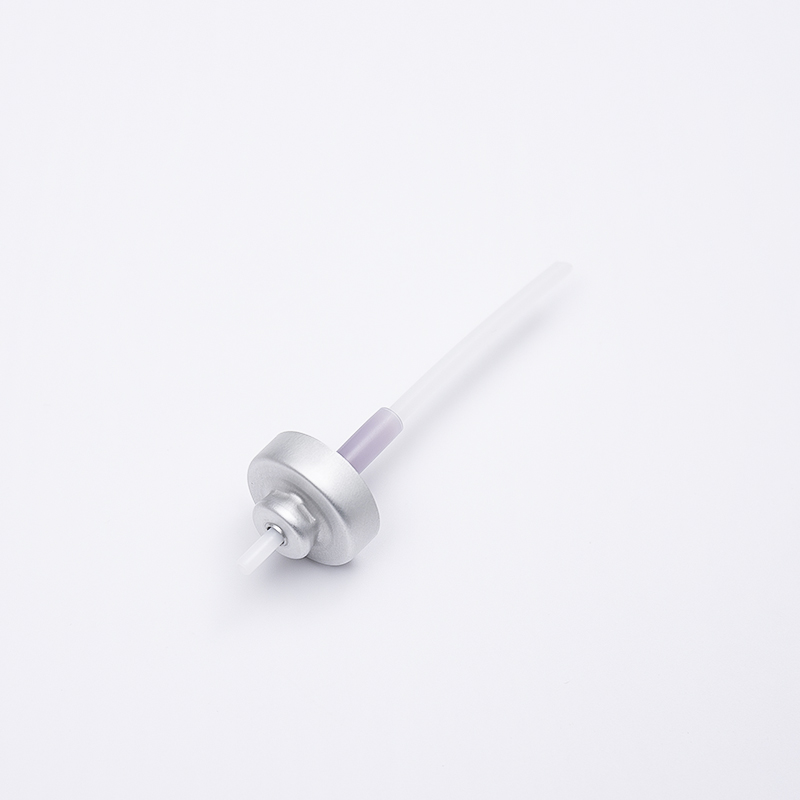 D20S2.8 120 mcl 20 mm Fragrance Spray Valve with ActuatorThis 20 mm valve and actuator combination provides a precise 120 mcl dose for perfume applications. It features durable materials, a standard can interface, and sealing technology to maintain product freshness.View Product →
Chemical compatibility and sealing
Elastomer and gasket selection follows the formulation, not the can. Solvent-based systems attack standard rubber, and high-ethanol contents can swell a poorly chosen gasket, changing the dose over the can's life. The specification sheet should therefore state the gasket compound explicitly. If in doubt, run a 48-hour swell test with the actual concentrate before freezing the specification.
Verifying the Specification with Samples and Crimp Trials
No specification sheet replaces a physical sample on your own can. Before committing to tooling or a purchase order, buyers should run three checks:
- Crimp a sample valve onto your actual can and measure crimp diameter and depth against the supplier's window.
- Weigh the delivered dose across the first, middle, and last actuations of the same can; metered valves should stay within a tight spread.
- Store the filled can at elevated temperature and measure weight loss to verify the valve seal.
A specification becomes trustworthy when it survives those tests. On our 20 mm lines - which include several automatic assembly lines dedicated to this format - we support customers with crimp trials, dose verification, and OEM/ODM customization of dose, stem, actuator color, and packaging. Before you sign, our guide on choosing a reliable aerosol valve and actuator manufacturer is a practical checklist for the audit.
20 mm Aerosol Valve Specification FAQ
Q1: What does "20 mm" mean in a 20 mm aerosol valve specification?
It refers to the mounting cup diameter crimped to the can neck. This format is standard on small aluminum aerosol cans for fragrance, air freshener, and personal care products.
Q2: What metered dosages are available?
Most 20 mm metered valves are offered from 35 to 200 mcl per actuation, including 50, 75, 100, 120, and 150 mcl steps. The delivered dose should be verified with crimp trials on your cans.
Q3: Can stem material and actuator be customized?
Yes. Plastic and metal stems are both available, and actuators can be selected or developed for different spray patterns and colors. OEM/ODM work typically covers dose, stem, nozzle, and cup finish without changing the can interface.
Q4: Why does crimping change the delivered dose?
The crimp controls the final vertical position of the valve in the can. A deeper or shallower crimp changes gasket compression and stem travel, shifting the metering chamber volume. Consistent crimp parameters are therefore part of the specification.
A 20 mm aerosol valve specification is a set of commitments: to the can, to the dose, and to the chemistry inside. Decide those three deliberately, verify them with real crimp trials, and the valve becomes the least risky component in your aerosol project. If you are at the sampling stage, send a can, a concentrate, and a target dose - that is the fastest way to turn a specification into a product.