English
 中文简体
中文简体 Español
 عربى
عربى
Clogging is a common issue encountered in aerosol actuator with spray nozzle for aerosol cans, affecting product performance and user satisfaction. Effective prevention and mitigation strategies are essential for maintaining consistent spray patterns, prolonging device life, and ensuring safe and reliable operation.
Understanding clogging in aerosol actuator with spray nozzle for aerosol cans
Clogging occurs when particles, residue, or dried product accumulate within the internal pathways of an aerosol actuator with spray nozzle for aerosol cans, obstructing liquid flow. This can result in irregular spray patterns, reduced output, or complete blockage. Common sources of clogging include:
- Dried product residue at the nozzle tip or stem
- Particulate contaminants in the formulation
- Interaction of formulation ingredients with internal actuator materials
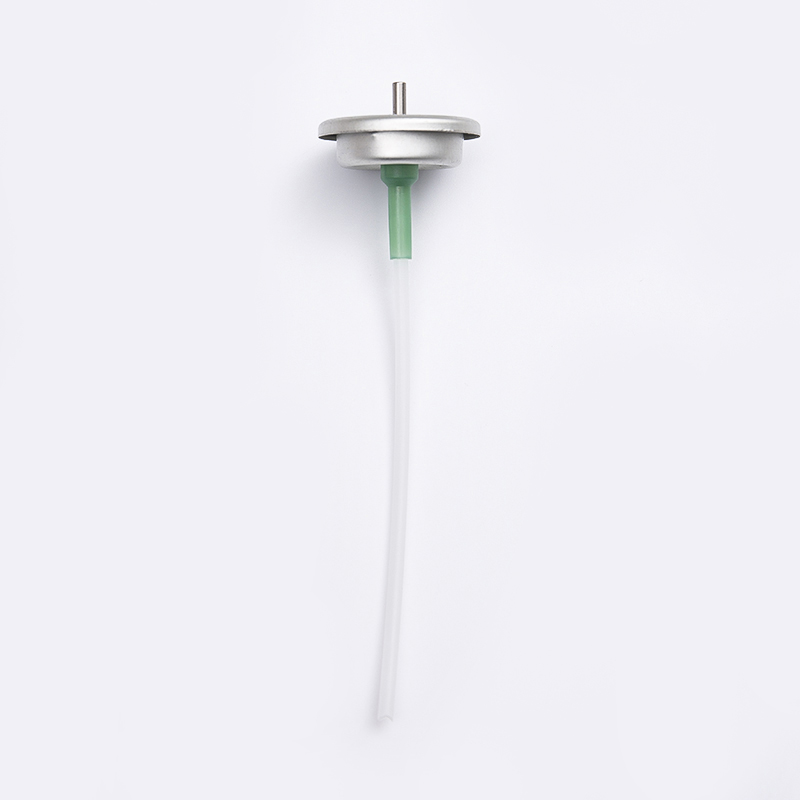
Clogging is particularly prevalent in devices that handle viscous formulations, such as creams, gels, or paint sprays, where residues may solidify upon contact with air. Understanding the internal structure of aerosol actuator with spray nozzle for aerosol cans is critical. Typically, the actuator consists of a stem, spring mechanism, nozzle orifice, and sealing components, all of which must be carefully designed to minimize obstruction.
Key factors contributing to clogging
The risk of clogging is influenced by multiple factors that interact in complex ways:
- Formulation viscosity – Higher viscosity liquids tend to adhere more strongly to actuator surfaces, increasing the chance of blockage.
- Nozzle orifice size – Smaller orifices are more prone to obstruction, especially when particulate matter is present.
- Product stability – Formulations that precipitate or crystallize over time can create solid deposits.
- Environmental conditions – Temperature and humidity can accelerate drying or solidification at the nozzle tip.
- Actuator material compatibility – Certain plastics or coatings may interact with the product, exacerbating residue buildup.
These factors highlight the need for a holistic approach in both actuator design and formulation engineering to reduce clogging effectively.
Design strategies to minimize clogging
The design of an aerosol actuator with spray nozzle for aerosol cans directly affects its resistance to clogging. Several approaches are widely adopted:
- Optimized nozzle geometry – A well-designed nozzle with a smooth internal channel and appropriately sized orifice promotes consistent flow.
- Surface coatings – Hydrophobic or low-friction coatings can reduce product adhesion, preventing buildup.
- Material selection – Actuator components made from chemically inert materials resist interaction with aggressive formulations.
- Spring tension adjustment – Properly calibrated spring mechanisms ensure that the actuator returns fully to its resting position, minimizing residual fluid retention.
Table 1 below summarizes these design considerations and their relative impact on clogging reduction:
| Design feature | Description | Impact on clogging |
|---|---|---|
| Nozzle geometry | Smooth internal channels with optimized orifice | High |
| Surface coating | Hydrophobic or low-friction coating | Medium to high |
| Material selection | Chemically inert plastics or PET | Medium |
| Spring tension | Correct calibration of stem return | Medium |
These strategies illustrate that actuator design is as crucial as product formulation in mitigating clogging issues.
Formulation considerations for reducing clogging
Reducing clogging is not solely a mechanical problem; aerosol actuator with spray nozzle for aerosol cans must also be paired with appropriate formulation practices. Key strategies include:
- Particle size control – Ensuring uniform and small particles in suspensions prevents nozzle obstruction.
- Anti-settling agents – Additives can maintain homogeneous dispersion, reducing precipitation and sedimentation.
- Volatility management – Adjusting solvent or propellant characteristics prevents premature drying at the nozzle tip.
- Compatibility testing – Verifying chemical compatibility between the formulation and actuator materials avoids adhesive interactions.
These formulation optimizations complement actuator design improvements, providing a comprehensive approach to clogging prevention.
Table 2: Formulation factors affecting clogging
| Formulation factor | Strategy | Expected outcome |
|---|---|---|
| Particle size | Maintain uniform small particles | Reduces mechanical blockage |
| Viscosity | Optimize for sprayability | Improves flow and consistency |
| Additives | Use anti-settling agents | Prevents residue accumulation |
| Solvent volatility | Adjust propellant or solvent | Minimizes drying at nozzle tip |
| Material compatibility | Test actuator material interaction | Prevents adhesion and chemical buildup |
These combined strategies demonstrate the importance of a synergistic approach, integrating both actuator engineering and formulation science.
Maintenance and operational practices
Even with optimized design and formulation, aerosol actuator with spray nozzle for aerosol cans requires proper maintenance and user handling to prevent clogging. Recommended practices include:
- Regular cleaning – Rinsing or wiping the nozzle tip after each use prevents product accumulation.
- Flushing techniques – For certain formulations, actuators may be flushed with a compatible solvent to remove residual material.
- Proper storage – Storing aerosol cans in controlled temperature and humidity conditions slows residue buildup.
- Routine inspection – Periodic checking of actuator components identifies early signs of clogging, allowing timely intervention.
Proper operational handling not only reduces clogging but also extends the functional lifespan of the aerosol actuator with spray nozzle for aerosol cans.
Advanced techniques for clogging prevention
Beyond basic maintenance, several advanced techniques have been developed to further reduce clogging:
- Anti-drip nozzle design – Special nozzle geometries minimize fluid retention at the tip.
- Micro-textured surfaces – Micro-patterned actuator channels reduce surface contact for residual products.
- Automated actuator cleaning systems – In industrial settings, automated cleaning of actuators in production lines prevents obstruction before the product reaches consumers.
- Formulation-propulsion integration – Optimizing the propellant and formulation system together reduces residue formation.
These advanced methods are increasingly adopted in high-volume production to ensure consistent performance of aerosol actuator with spray nozzle for aerosol cans.
Environmental and regulatory considerations
Clogging prevention also intersects with environmental and safety considerations. For example:
- Use of eco-friendly cleaning solvents is encouraged to reduce environmental impact.
- Ensuring actuator materials comply with safety regulations prevents chemical contamination in end-use applications.
- Proper disposal of clogged actuators is essential for regulatory compliance and sustainability.
By integrating environmental and regulatory considerations, manufacturers can achieve both performance and compliance objectives.
Conclusion
Reducing clogging in aerosol actuator with spray nozzle for aerosol cans requires a multifaceted approach. Effective strategies combine design optimization, formulation control, and user maintenance practices. Emphasizing material selection, nozzle geometry, coating treatments, and formulation engineering ensures consistent spray performance, enhances product reliability, and extends the actuator’s lifespan. Maintaining these practices across the lifecycle of the product is critical for minimizing performance issues and meeting user expectations.
Frequently Asked Questions (FAQ)
Q1: How can I prevent clogging in high-viscosity formulations?
A1: Use optimized nozzle geometry, reduce particle size, and include anti-settling additives in the formulation to maintain smooth flow.
Q2: Can clogged aerosol actuators be cleaned without disassembly?
A2: Yes, minor clogging can be resolved by flushing the nozzle with a compatible solvent or wiping the tip after use.
Q3: Does temperature affect clogging?
A3: Yes, elevated temperatures may increase drying rates or viscosity changes, while cold storage can cause thickening, both contributing to clogging.
Q4: Are special coatings necessary for all aerosol actuators?
A4: Not always, but hydrophobic or low-friction coatings can significantly reduce residue buildup, especially for sticky or viscous formulations.
Q5: How often should actuators be inspected?
A5: Routine inspection depends on usage frequency, but monthly checks are recommended for high-use applications to detect early signs of clogging.
References
- Jones, A., & Smith, B. (2022). Aerosol packaging engineering: Design and performance. Packaging Science Press.
- Patel, R., & Li, H. (2021). Formulation considerations for aerosol devices. International Journal of Aerosol Technology, 35(4), 210–225.
- Chen, Y., & Kumar, S. (2020). Spray nozzle optimization and clogging prevention. Journal of Industrial Packaging, 28(3), 145–159.