English
 中文简体
中文简体 Español
 عربى
عربى
Introduction and systems context
In aerosol dispensing systems, the spray cap is often perceived as a secondary plastic component compared with the valve, actuator stem, and propellant system. From a systems-engineering standpoint, this perception is incomplete. The spray cap is a functional interface between the internal fluid-mechanical environment and the external application environment. Its internal channels, orifice geometry, swirl features, and exit shape strongly influence how liquid is atomized, how droplets are distributed, and how the spray plume behaves in real-world use.
Aerosol dispensing as a coupled system
Key subsystems affecting spray behavior
Aerosol spray performance is governed by interactions among several subsystems:
- Formulation properties (viscosity range, surface behavior, solids content, solvent balance)
- Propellant type and delivery method (liquefied gas, compressed gas, hybrid approaches)
- Valve architecture (orifice sizing, stem geometry, sealing method)
- Actuator and spray cap geometry
- Environmental and application conditions (ambient temperature, target distance, orientation)
From a systems perspective, spray cap geometry is a control element that translates internal energy and flow conditions into external spray characteristics. The same formulation and valve can produce significantly different spray behavior when paired with different spray cap designs.
Key engineering implication: spray cap selection and geometry optimization must be treated as part of system configuration, not as a cosmetic or interchangeable accessory.
Functional elements of spray cap geometry
Spray cap geometry can be divided into several functional regions. Each region contributes to atomization and spray pattern formation.
1. Inlet interface and stem coupling
The inlet region connects the valve stem to the internal spray cap channels. Design considerations include:
- Inlet bore diameter
- Seating tolerance with valve stem
- Alignment accuracy
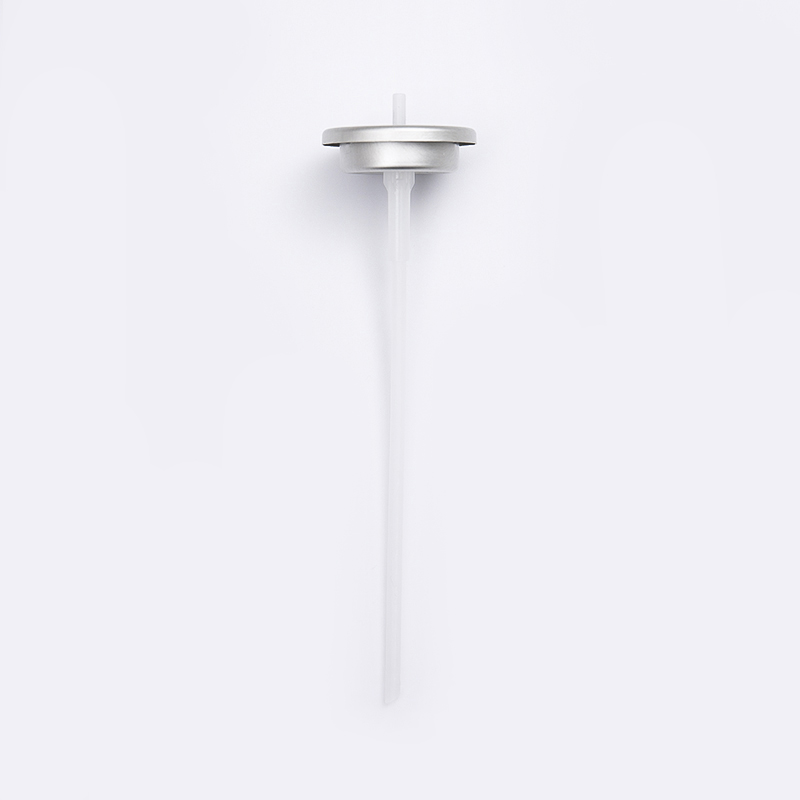
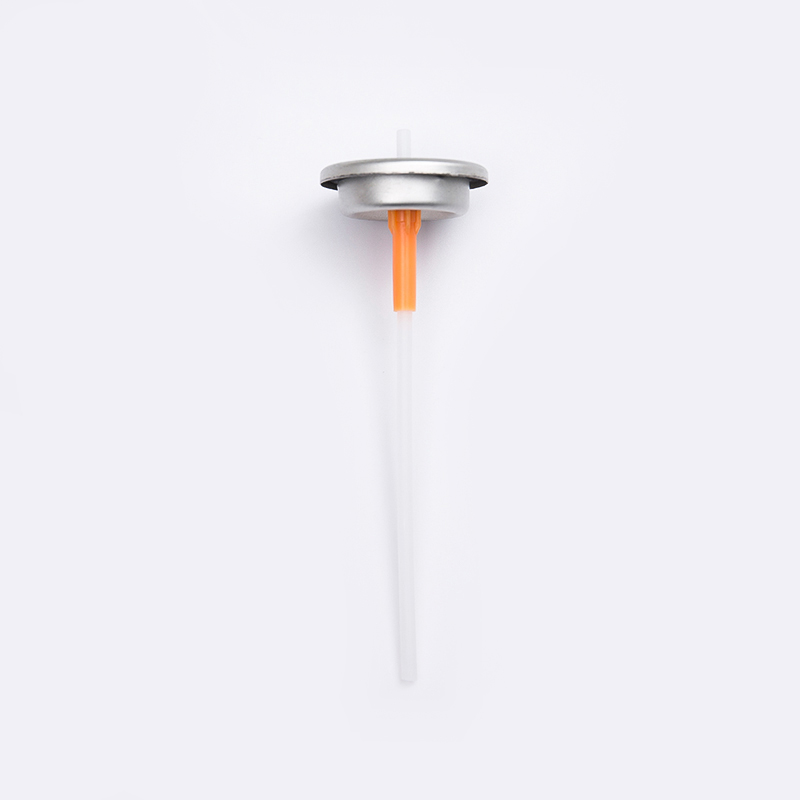
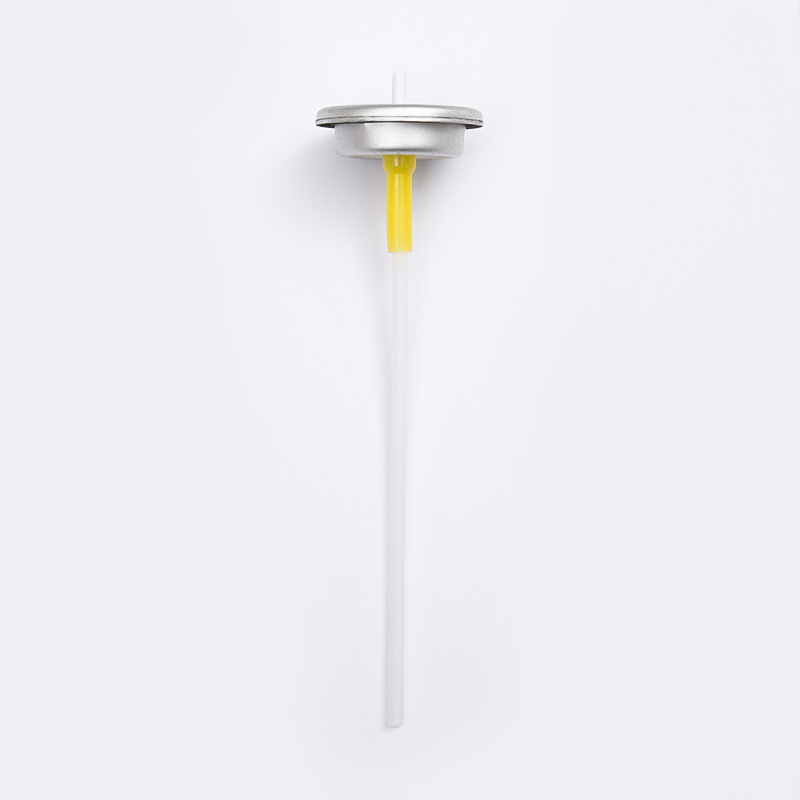
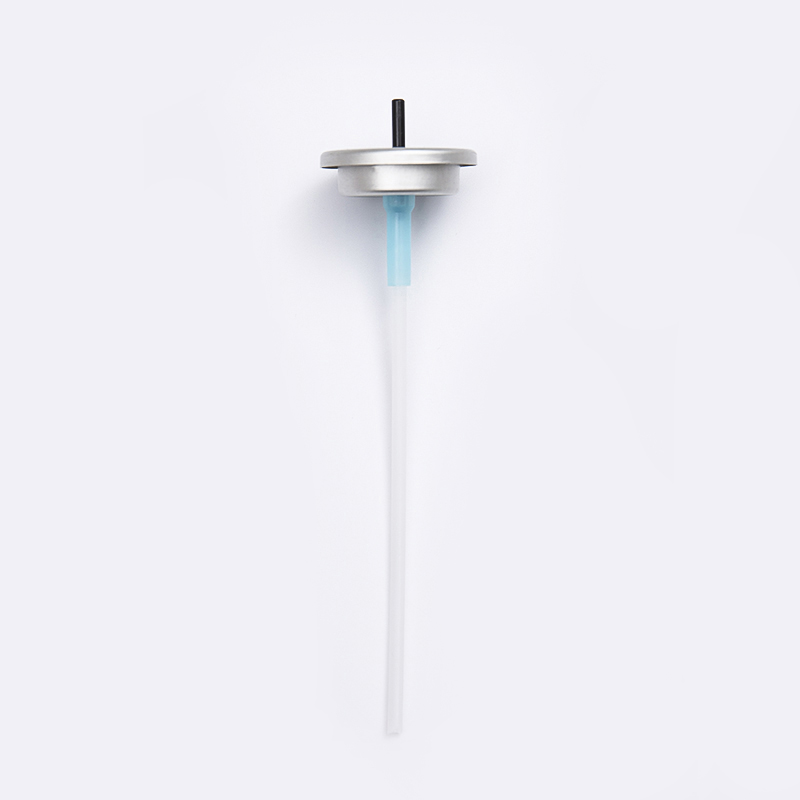
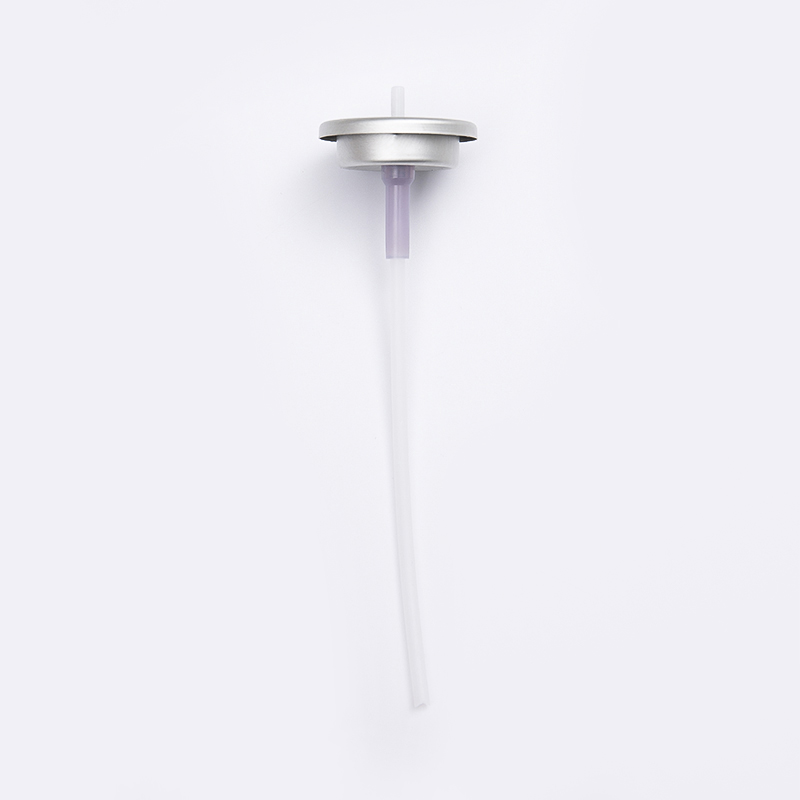
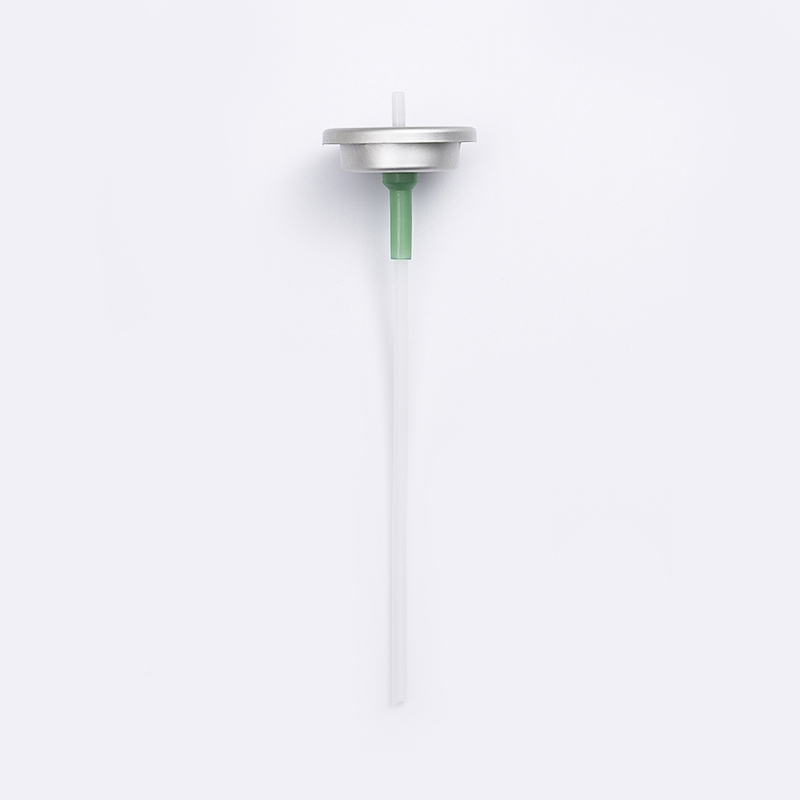
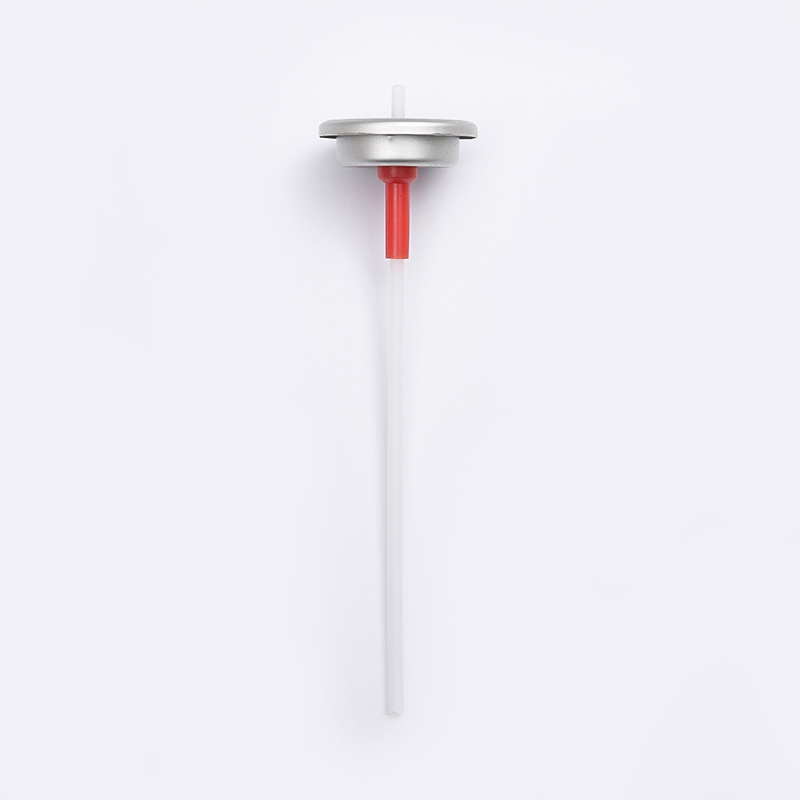
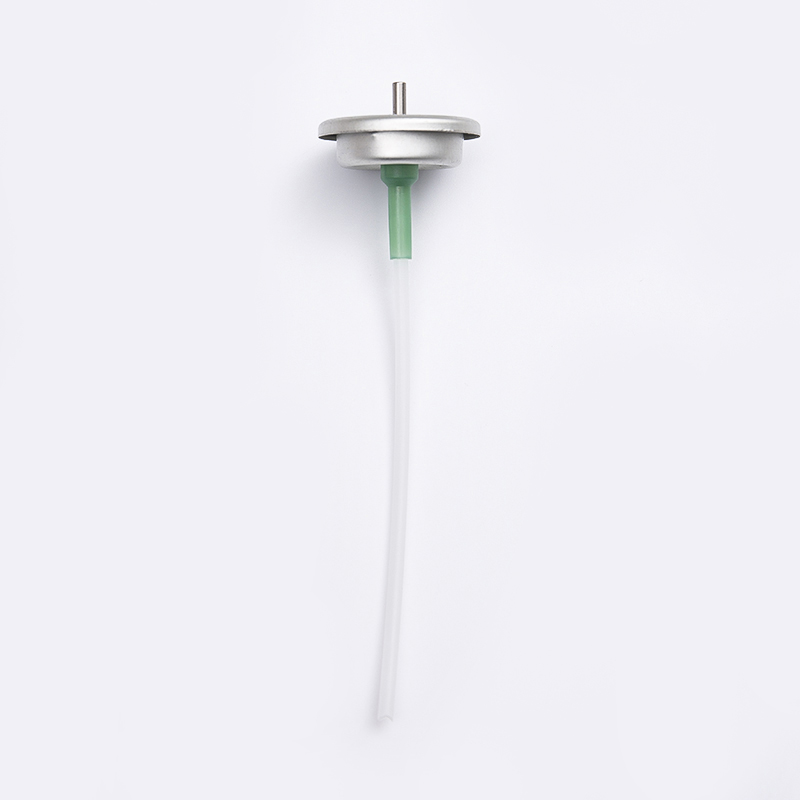
Engineering relevance: Poor inlet alignment or restrictive inlet geometry can create unstable flow conditions, leading to inconsistent spray angle and fluctuating output. For integrated systems using components such as the zw-20 aerosol cans, aerosol can valve spray cap, inlet consistency is a prerequisite for repeatable downstream atomization.
2. Internal flow channels
After entering the spray cap, fluid passes through one or more internal channels before reaching the swirl or exit region. These channels influence:
- Flow conditioning
- Pressure recovery
- Shear development
Design parameters include:
- Channel length
- Cross-sectional shape
- Surface finish
- Transitions between channel segments
Key point: Longer or more restrictive channels can stabilize flow but may increase clogging risk, especially in formulations with particulates, thickeners, or crystallizing components.
3. Swirl chamber and angular flow features
Many spray caps incorporate swirl chambers or angled entry paths to impart rotational motion to the fluid. This rotational energy promotes liquid sheet formation and droplet breakup.
Common swirl-related features include:
- Tangential inlets
- Helical channels
- Offset entry ports
System effect: Increased swirl intensity generally produces finer atomization and wider spray angles. However, excessive swirl can reduce penetration and increase overspray, which may be undesirable in industrial or precision applications.
4. Orifice geometry
The exit orifice is one of the most critical geometric features. Orifice parameters include:
- Diameter
- Length-to-diameter ratio
- Edge sharpness
- Taper or straight bore
The orifice controls:
- Flow rate
- Initial jet velocity
- Primary breakup behavior
Important engineering consideration: Small changes in orifice diameter can significantly alter droplet size distribution and spray density. Orifice edge quality also affects how the liquid sheet detaches and fragments.
5. Exit face and plume shaping
Beyond the internal orifice, the external face geometry shapes how the spray plume expands into ambient air. Features include:
- Exit face angle
- Recess depth
- External shrouds or guides
These features influence:
- Spray cone stability
- Plume symmetry
- Edge definition of the spray pattern
Atomization mechanisms influenced by geometry
Liquid sheet formation
In swirl-based designs, liquid exits the orifice as a thin rotating sheet. The thickness and stability of this sheet are governed by:
- Swirl chamber dimensions
- Orifice diameter
- Internal surface smoothness
System insight: A thinner, more uniform liquid sheet typically leads to smaller droplets and more uniform spray patterns. However, thinner sheets may also be more sensitive to contamination and wear.
Primary breakup behavior
Primary breakup refers to the initial disintegration of the liquid sheet or jet into ligaments and large droplets. Spray cap geometry influences:
- Shear intensity
- Sheet stability
- Edge disturbances
Geometric features that promote controlled disturbances can improve breakup consistency, leading to more predictable droplet size distributions.
Secondary breakup and plume development
After the initial breakup, droplets may undergo further fragmentation depending on exit velocity and ambient interaction. While this is influenced by propellant energy, the spray cap exit geometry sets the initial conditions.
Engineering takeaway: Spray cap geometry defines the starting state of the plume. Downstream droplet evolution cannot compensate for poorly conditioned exit flow.
Spray pattern characteristics and geometric drivers
Spray pattern is not a single parameter. It is a combination of multiple measurable and application-relevant characteristics.
Spray angle
Spray angle is primarily influenced by:
- Swirl intensity
- Orifice shape
- Exit face geometry
Higher swirl generally increases spray angle, producing wider coverage but lower impact density at a given distance.
Spray density distribution
Density distribution describes how liquid mass is distributed across the spray cone. Geometry affects whether the pattern is:
- Hollow cone
- Full cone
- Solid jet
- Fan pattern
System implication: Matching density distribution to application needs (for example, coating vs spot application) requires coordinated design of swirl features and orifice geometry.
Droplet size tendencies
While droplet size is also influenced by formulation and propellant, geometry plays a defining role in initial droplet formation.
- Smaller orifices and higher swirl tend to produce finer droplets.
- Straight-through designs with minimal swirl tend to produce larger droplets.
Important: Finer droplets increase surface coverage but may also increase airborne drift and inhalation exposure, which can have regulatory and safety implications.
Geometry trade-offs in industrial and commercial applications
From a systems-engineering perspective, spray cap geometry is a balance of competing requirements.
Coverage versus penetration
- Wide spray angle improves coverage.
- Narrow spray angle improves penetration and target impact.
Geometry choices must reflect the application environment and target surface characteristics.
Fine atomization versus clog resistance
- Fine atomization typically requires smaller orifices and more complex flow paths.
- Larger, simpler flow paths reduce clogging risk.
Key design trade-off: In formulations with suspended solids or high residue potential, geometry must prioritize flow robustness even if atomization quality is slightly reduced.
Precision versus tolerance sensitivity
Complex geometries with tight tolerances can produce highly consistent spray patterns but may be more sensitive to:
- Manufacturing variation
- Material shrinkage
- Tool wear
For large-scale systems using spray caps such as the zw-20 aerosol can valve spray cap, tolerance stack-up across valve, stem, and cap must be evaluated as a combined system.
Influence of propellant strategy on geometry requirements
Liquefied propellants
Liquefied propellants typically provide relatively stable pressure over the life of the can. Geometry design can assume relatively consistent inlet energy.
Design implication: Spray cap geometry can be optimized for stable atomization over a wide fill-level range.
Compressed gas propellants
Compressed gases result in declining pressure as the product is dispensed. Geometry must accommodate a wider operating envelope.
System effect: Geometry that performs well at high pressure may underperform at lower pressure, leading to larger droplets or reduced spray angle late in product life.
Hybrid and alternative systems
Newer systems combining multiple gas strategies or barrier-type delivery introduce additional variability. Spray cap geometry must be evaluated for compatibility with changing pressure and flow characteristics.
Materials and manufacturing considerations
Spray cap geometry is constrained not only by fluid mechanics but also by manufacturing processes and material properties.
Injection molding limitations
Most spray caps are injection molded. Geometry must account for:
- Draft angles
- Gate location
- Material flow
- Shrinkage behavior
Engineering consideration: Very small orifice and swirl features require precise tooling and process control to maintain dimensional consistency.
Material stiffness and chemical resistance
Material selection affects:
- Dimensional stability
- Wear resistance
- Chemical compatibility
Over time, certain formulations can cause swelling, stress cracking, or surface degradation, altering internal geometry and changing spray behavior.
Comparative overview of common geometric configurations
The table below summarizes how typical geometric strategies influence spray performance. This is a generalized engineering comparison rather than product-specific data.
| Geometry Feature Strategy | Typical Atomization Tendency | Spray Pattern Character | System Trade-offs |
|---|---|---|---|
| Straight-through orifice | Coarser droplets | Narrow, jet-like | High penetration, lower clog risk |
| Moderate swirl chamber | Medium droplet size | Balanced cone | Versatile, moderate tolerance sensitivity |
| High swirl intensity | Fine droplets | Wide cone | Increased overspray, tighter tolerances |
| Larger orifice diameter | Larger droplets | Higher flow density | Improved clog resistance |
| Smaller orifice diameter | Finer droplets | Lower mass flow | Higher clog sensitivity |
Key interpretation: There is no single optimal geometry. The correct configuration depends on system-level performance targets.
System integration with valve and actuator design
Spray cap geometry cannot be optimized independently of the valve and actuator.
Valve stem alignment
Misalignment between the stem and cap inlet can distort flow before it reaches swirl or orifice features. This can cause:
- Asymmetric spray patterns
- Inconsistent droplet distribution
Valve orifice and cap orifice interaction
When both valve and cap include flow-restricting features, their combined effect must be evaluated. Redundant restriction can reduce system efficiency and increase clogging risk.
Tolerance stack-up
Dimensional variation across:
- Valve stem
- Actuator socket
- Spray cap inlet
can create cumulative effects on internal flow geometry.
Engineering practice: Functional testing should evaluate assembled systems, not just individual components.
Regulatory and safety considerations
Spray pattern and atomization affect not only performance but also safety and compliance.
Inhalation exposure potential
Finer droplets increase airborne residence time. Geometry choices that create a very fine mist may raise occupational exposure concerns in certain environments.
Overspray and environmental release
Wide spray patterns and fine droplets can increase unintended release to surrounding areas. Geometry that reduces overspray can support waste reduction and environmental control objectives.
Child-resistance and misuse considerations
Some spray cap designs incorporate geometric features that affect actuation force or spray initiation characteristics. These features can influence misuse resistance and safety classification.
Engineering evaluation and validation methods
From a systems-engineering viewpoint, geometry effects should be validated using structured testing.
Pattern visualization
Common qualitative and semi-quantitative methods include:
- Spray card analysis
- Target surface wetting patterns
- High-speed visual observation
Flow and spray consistency testing.
Repeatability testing across production lots can reveal geometry-related sensitivity to manufacturing variation.
Clogging and durability assessment
Long-term cycling tests can identify whether small or complex geometry features are prone to degradation or blockage over product life.
Integration of the zw-20 aerosol can valve spray cap within the system design.
In system design contexts where components such as the zw-20 aerosol cans, aerosol can valve, and spray cap are specified, engineering teams typically evaluate:
- Compatibility with valve stem geometry
- Suitability for the target spray angle and density
- Resistance to formulation-specific fouling
- Stability of geometry under expected environmental and chemical exposure
System engineering principle: Performance should be defined at the assembled system level, with spray cap geometry treated as a critical design variable rather than a fixed commodity parameter.
Common engineering challenges related to spray cap geometry
Variability across production
Even small variations in orifice diameter or swirl channel dimensions can lead to perceptible spray pattern differences. This highlights the need for:
- Process capability analysis
- Tool maintenance planning
- Incoming inspection criteria
Geometry drifts over the product life.
Material wear, chemical interaction, and mechanical stress can subtly alter geometry. Over time, this may result in:
- Broader spray angles
- Larger droplets
- Increased leakage or drip
Cross-compatibility assumptions
Assuming that a spray cap will behave identically across different valves or formulations is a common source of performance issues. Geometry must be validated within the full system context.
Summary
Spray cap geometry plays a decisive role in how an aerosol system atomizes liquid and forms a spray pattern. From a systems-engineering perspective, it acts as a flow-conditioning and energy-conversion interface, translating internal pressure and formulation properties into externally observable spray behavior.
Key conclusions include:
- Spray cap geometry is a primary driver of atomization and spray pattern, not a secondary cosmetic feature.
- Internal channels, swirl features, orifice design, and exit face geometry collectively define droplet size tendencies, spray angle, and density distribution.
- Geometry trade-offs must balance atomization quality, clog resistance, tolerance sensitivity, and application requirements.
- Propellant strategy and formulation properties significantly influence which geometry configurations are appropriate.
- Components such as the zw-20 aerosol can valve spray cap should be evaluated as part of an integrated system, not in isolation.
A structured, system-level approach to spray cap geometry selection and validation supports more predictable performance, improved reliability, and better alignment with regulatory, safety, and application objectives.
FAQ
Q1: Does a smaller spray cap orifice always mean finer atomization?
Not necessarily. While smaller orifices tend to promote finer droplets, overall atomization also depends on swirl intensity, internal flow conditioning, and inlet energy. System-level design is required to achieve consistent results.
Q2: Can spray cap geometry compensate for low system pressure?
Geometry can partially influence spray formation at lower pressures, but it cannot fully compensate for insufficient inlet energy. Compressed gas systems often require a geometry optimized for a wider pressure range.
Q3: How does spray cap geometry affect clogging risk?
Smaller or more complex internal features increase sensitivity to particulates, crystallization, and residue buildup. Geometry must be matched to formulation cleanliness and stability.
Q4: Should spray cap geometry be changed when switching propellant types?
Often yes. Different propellants change inlet energy and flow behavior, which can shift optimal swirl and orifice configurations.
Q5: Why is system testing more important than component testing?
Spray behavior is determined by interactions among formulation, valve, and spray cap. Component-only testing cannot fully predict assembled system performance.
References
- European Aerosol Federation (FEA). Aerosol Dispensing Technology and Component Interactions.
- U.S. Consumer Product Safety Commission (CPSC). Aerosol Product Safety and Spray Characteristics.
- ISO Technical Committees on Aerosol Packaging and Dispensing Systems. Guidelines for Aerosol Valve and Actuator Performance Evaluation.