English
 中文简体
中文简体 Español
 عربى
عربى
In the aerosol packaging industry, valve selection is one of the most consequential engineering decisions a product developer or procurement manager can make. The valve does not merely seal a can — it controls the entire dispensing behavior of the product inside. Two dominant valve categories define the landscape: the continuous spray valve and the metered aerosol valve. While both share the same basic purpose of releasing pressurized content, their internal mechanisms, performance characteristics, regulatory implications, and ideal applications are fundamentally different.
For B2B buyers sourcing aerosol components at scale — whether for personal care, household chemicals, pharmaceuticals, food products, or industrial applications — understanding these differences is not academic. It directly affects product performance, compliance, cost structure, consumer experience, and ultimately, market competitiveness. This article provides a thorough, technically grounded comparison of both valve types to support informed procurement and product development decisions.
What Is a Continuous Spray Aerosol Valve and How Does It Work?
A continuous spray aerosol valve, often called a standard aerosol valve or conventional spray valve, releases product in an uninterrupted stream for as long as the actuator is depressed. The flow continues until the user releases pressure on the button. This is the most common valve type found in everyday aerosol products worldwide.
Core Components of a Continuous Spray Valve
The continuous spray valve consists of several integrated components that work together to manage pressurized product release:
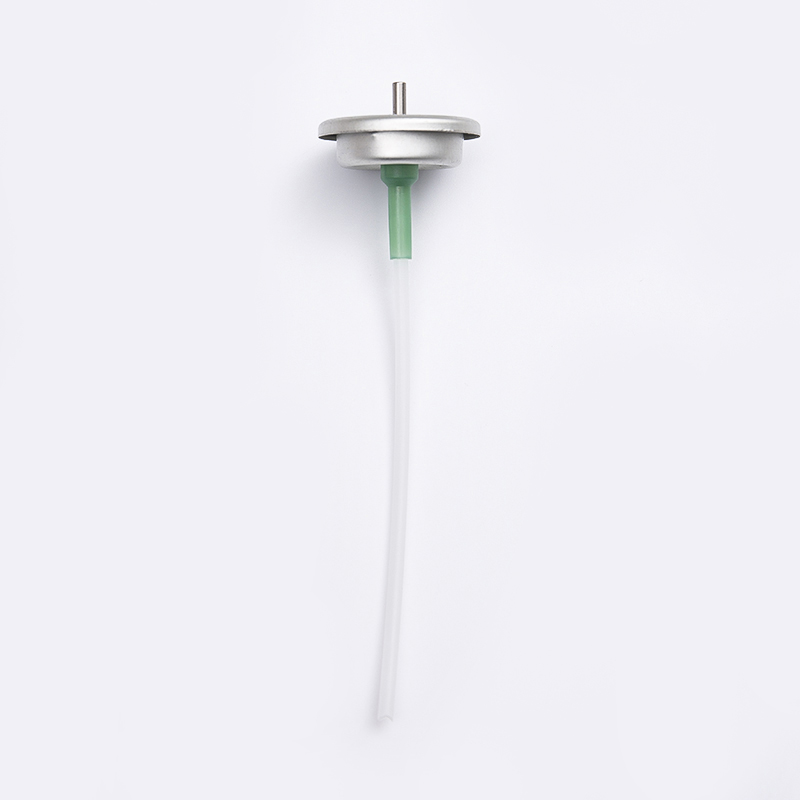
- Valve cup (mounting cup): The metal or plastic disc crimped onto the aerosol can opening, which forms the sealed base of the valve assembly.
- Valve body (housing): The main structural component that houses the internal parts and creates the flow path for the product.
- Valve stem: The hollow tube that rises through the valve body and connects to the actuator. When depressed, it opens the internal orifice to release product.
- Gaskets (inner and outer): Rubber or elastomeric seals that prevent leakage and control flow when the valve is in the closed position.
- Spring: Returns the valve stem to the closed (sealed) position when actuation pressure is released.
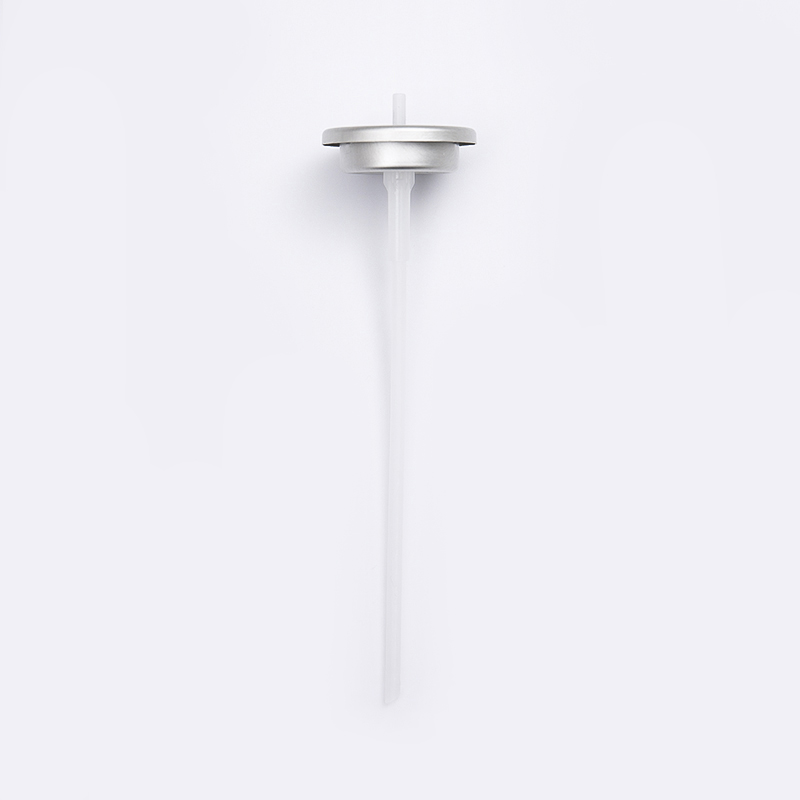
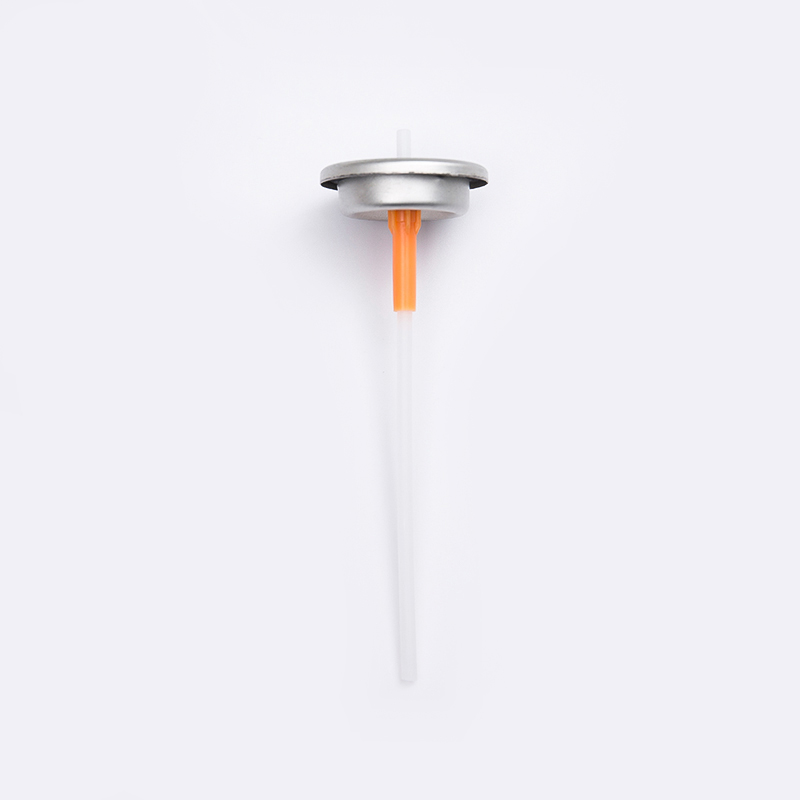
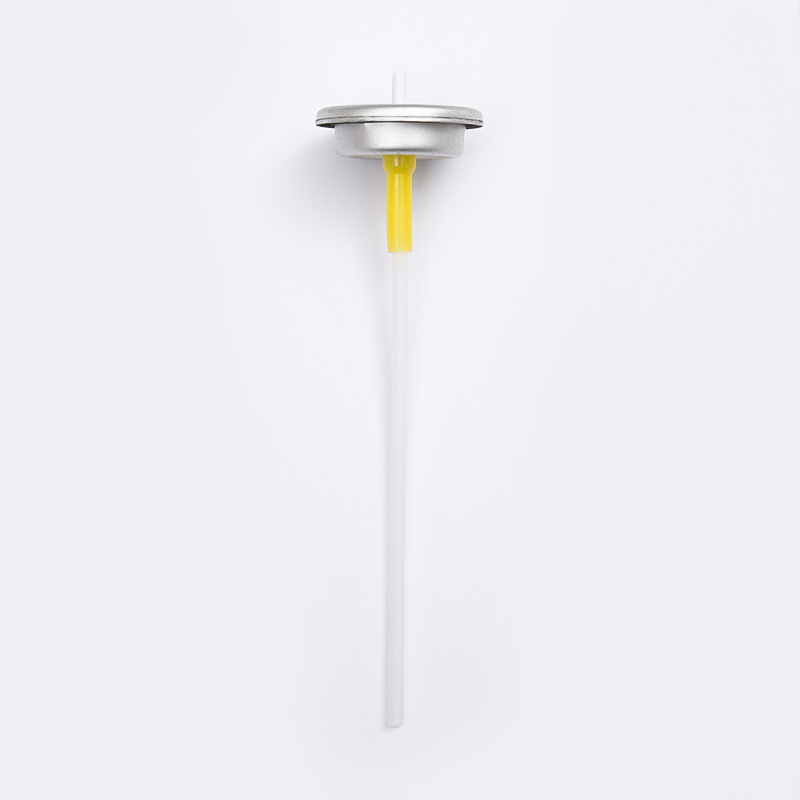
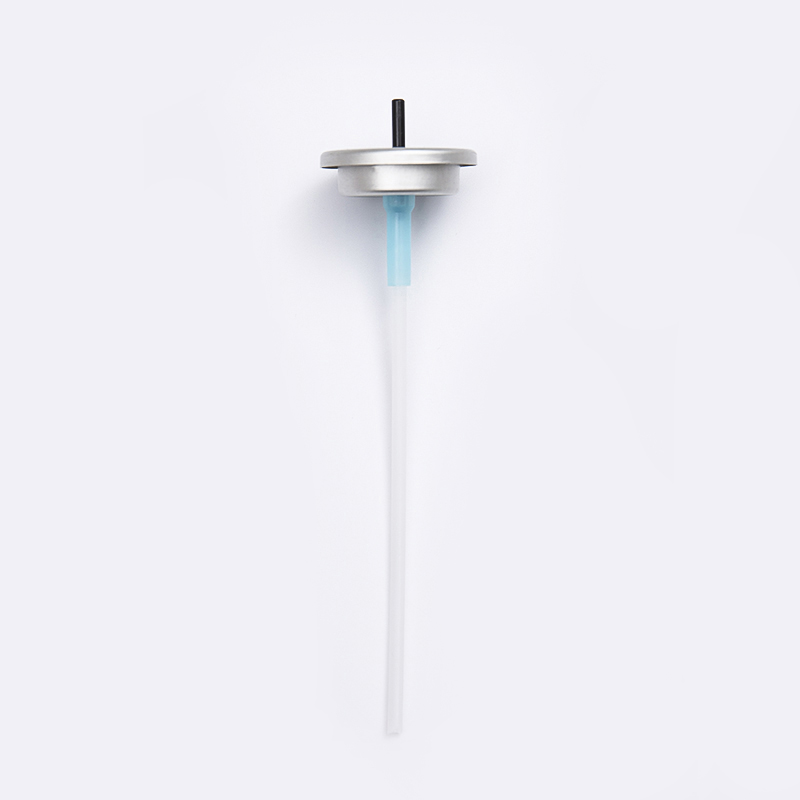
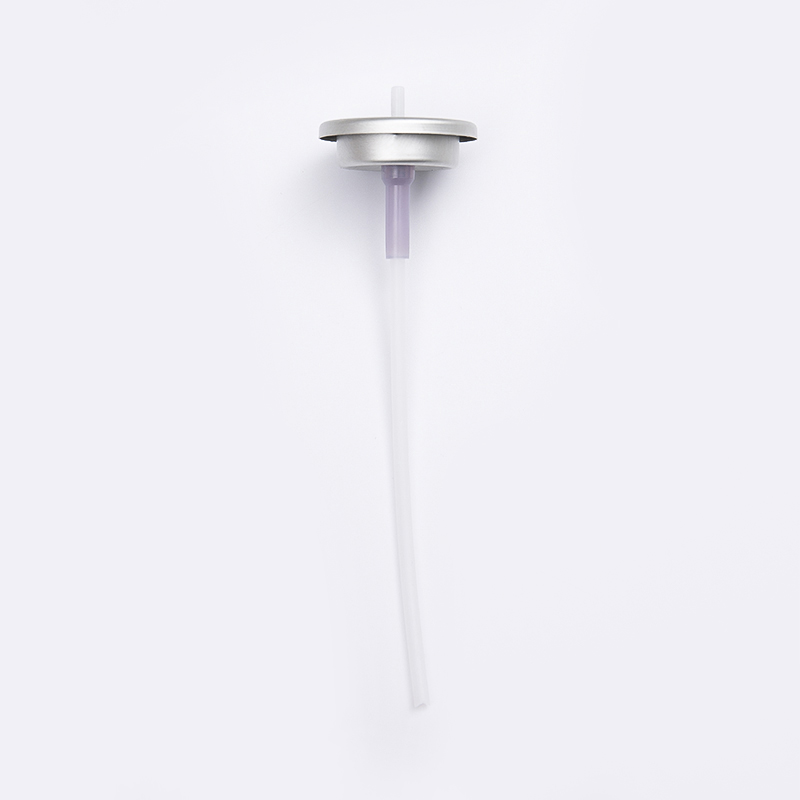
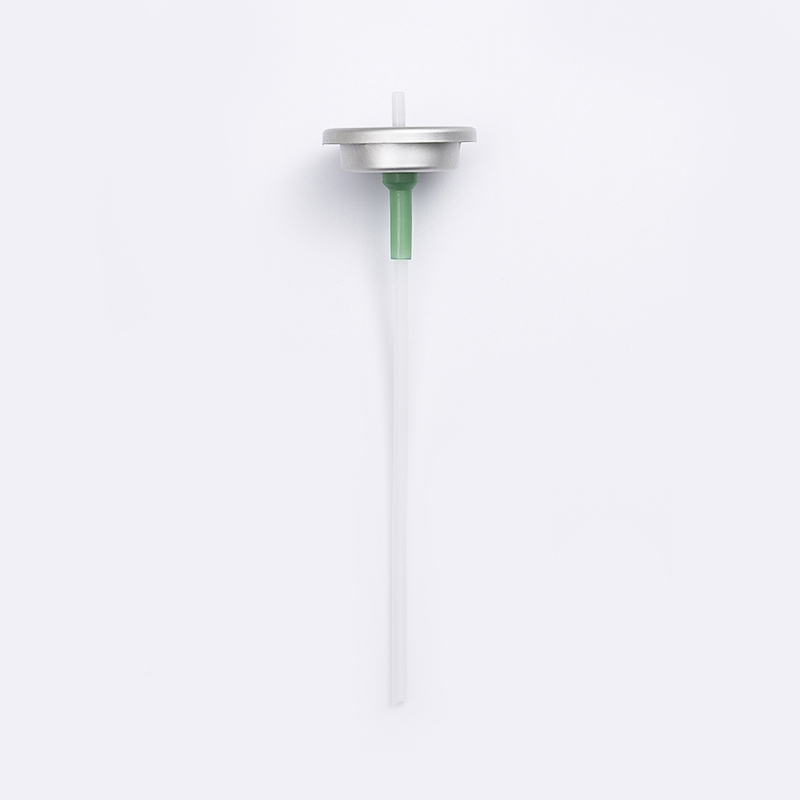
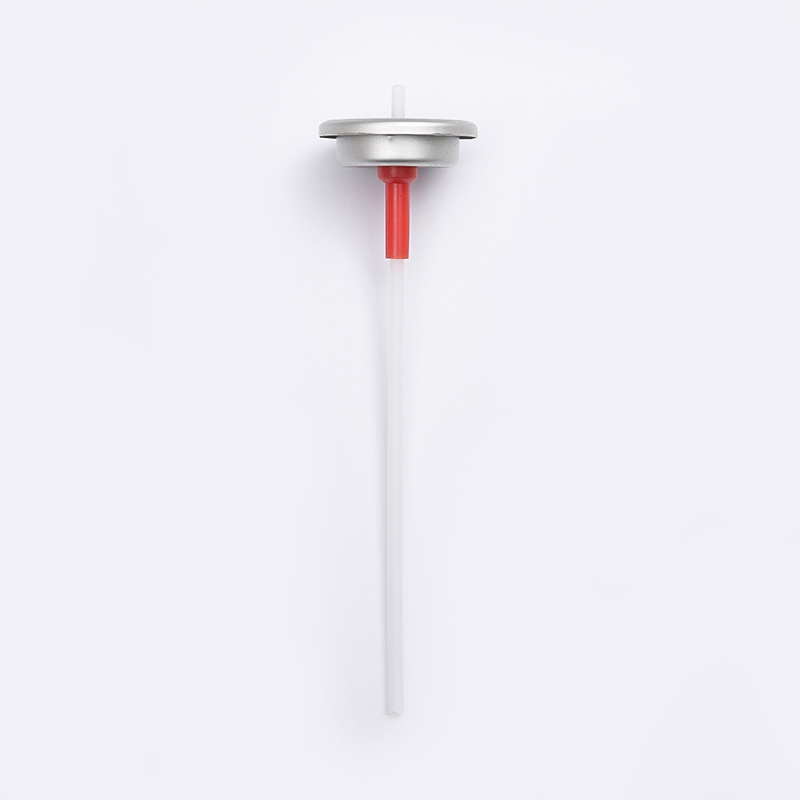
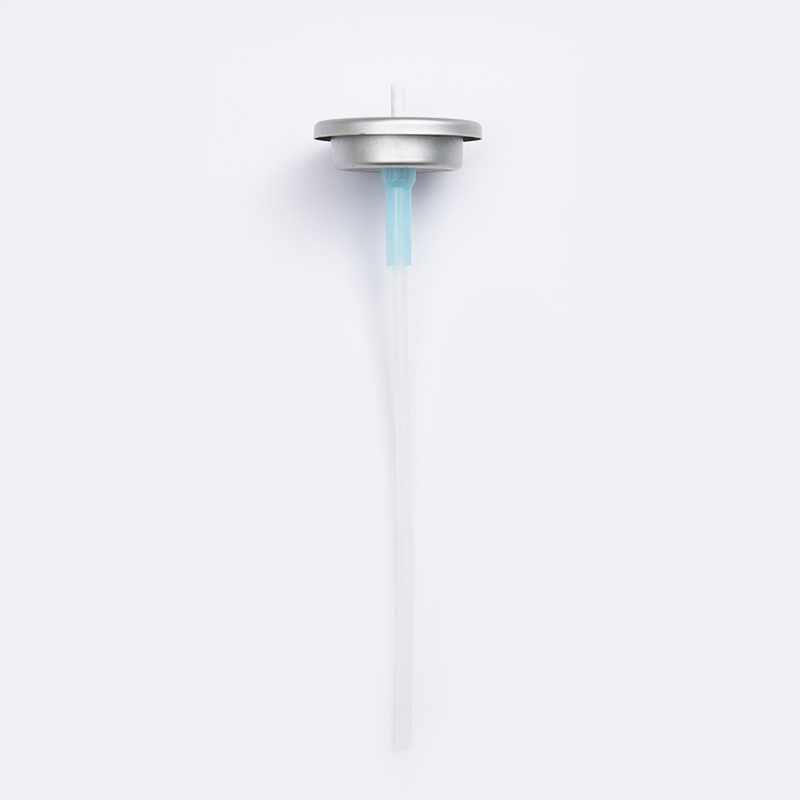
- Dip tube: A plastic tube extending from the valve body to the bottom of the can, drawing liquid product upward for dispensing.
The Mechanism of Continuous Flow
When the user presses the actuator downward, the valve stem is displaced, creating an opening between the stem and the inner gasket. This opening connects the pressurized interior of the can — through the dip tube — to the stem orifice and then to the actuator nozzle. As long as pressure is maintained on the actuator, propellant pushes product up the dip tube, through the valve, and out of the nozzle in a continuous stream.
The spray pattern, particle size, and output rate are determined by several factors: the stem orifice diameter (typically ranging from 0.3 mm to 1.5 mm), the actuator orifice geometry, the propellant type and pressure, and the viscosity of the product. Continuous spray valves can be engineered to deliver outputs ranging from 0.15 g/second to over 2.0 g/second depending on the application.
Spray Pattern Variations in Continuous Valves
Continuous valves are not one-size-fits-all. They can be configured to produce different spray patterns through actuator and orifice design:
- Fine mist: Used in hair care, air fresheners, and fabric sprays — relies on small orifices and high propellant pressure to atomize liquid into droplets of 20 to 80 microns.
- Foam: Achieved by combining specific product-to-propellant ratios with a porous or mechanical breakup actuator. Common in shaving creams and whipped toppings.
- Jet or stream: Larger orifice diameters produce a directed, concentrated stream. Used in insecticides, engine degreasers, and personal defense sprays.
- Wide cone or fan spray: Achieved through specialized actuator geometries to cover large surface areas efficiently.
What Is a Metered Aerosol Valve and How Does It Work?
A metered aerosol valve — also referred to as a metered dose valve (MDV) or quantitative valve — is engineered to release a precise, predetermined quantity of product with every single actuation, regardless of how long the actuator is held down. Once the metered dose has been fully expelled, no additional product flows even if the button remains depressed.
This fundamental distinction in behavior — fixed dose per actuation versus continuous variable flow — makes metered valves indispensable in applications where dosage accuracy is critical. The spray aerosol valve in metered format is a precision-engineered component, not merely a dispensing mechanism.
Internal Architecture of a Metered Valve
While metered valves share some structural elements with continuous valves, they include an additional critical component: the metering chamber. This small, precisely calibrated volume — typically ranging from 25 microliters (mcL) to 140 mcL — is at the heart of the metered dosing mechanism.
- Metering chamber: A sealed cavity between the valve body and the stem gasket that fills with a controlled volume of product between actuations.
- Inner stem gasket: Seals the metering chamber from the can interior when the valve is actuated, ensuring only the pre-filled chamber volume is discharged.
- Outer stem gasket: Seals the valve from the external environment and opens only during actuation.
- Valve stem with tank orifice: Controls the refilling of the metering chamber when the valve returns to the closed position.
- Return spring: Resets the stem and simultaneously allows product to refill the metering chamber for the next dose.
The Two-Phase Actuation Cycle of a Metered Valve
Understanding how a metered valve operates requires visualizing two distinct phases:
- Discharge phase: When the actuator is pressed, the metering chamber is isolated from the can interior (the tank orifice is closed by the stem gasket). Only the product already contained within the metering chamber is expelled through the stem and actuator nozzle. This produces the metered dose.
- Refill phase: When the actuator is released and the spring returns the stem to its resting position, the tank orifice reopens. Pressurized product from the can flows back into the metering chamber, refilling it to exactly the calibrated volume for the next actuation.
This cyclical mechanism guarantees that every actuation delivers the same dose — whether it is the first spray from a newly filled can or the last spray before the can is nearly empty. Consistency over the product's entire life cycle is one of the primary performance advantages of metered valves.
Side-by-Side Technical Comparison: Continuous vs Metered Aerosol Valve
The table below summarizes the key technical and operational differences between the two valve types across critical parameters relevant to product developers and procurement specialists:
| Parameter | Continuous Spray Valve | Metered Aerosol Valve |
|---|---|---|
| Output per actuation | Variable — depends on duration of press | Fixed — predetermined by metering chamber volume |
| Dose accuracy | Low to moderate | High (typically plus or minus 10% or less) |
| Metering chamber | Absent | Present (25 mcL to 140 mcL range) |
| Valve complexity | Simpler — fewer critical tolerances | Higher — tight dimensional control required |
| Typical output rate | 0.15 to 2.0+ g/sec | Fixed per actuation (e.g., 50 mcL, 100 mcL) |
| Regulatory requirements | Standard aerosol regulations | Pharmaceutical-grade standards (where applicable) |
| Common applications | Hair spray, paint, insecticide, deodorant, cooking spray | Inhalers, nasal sprays, air freshener dispensers, perfume, self-defense sprays |
| Consumer effort required | Press and hold | Single quick press delivers complete dose |
| Product waste risk | Higher — user-dependent | Lower — dose is fixed regardless of user behavior |
| Unit manufacturing cost | Lower | Higher due to precision components |
| Can orientation sensitivity | Varies by design | Some designs are position-sensitive during refill |
Key Differences in Internal Mechanism Design
While the table above provides a comparative overview, the true distinction between these valve types is best appreciated by examining how each component design choice affects performance.
Orifice Diameter and Flow Rate Control
In a continuous spray valve, the stem orifice diameter is the primary flow control variable. A smaller orifice (e.g., 0.3 mm) produces a fine mist with lower output per unit time, while a larger orifice (e.g., 1.0 mm or above) delivers coarser particles at higher volumes. Manufacturers routinely adjust orifice size to match product viscosity and intended spray behavior.
In a metered valve, the orifice diameter still influences atomization quality, but the metering chamber volume is the primary control variable for total dose delivery. The orifice must be sized to expel the full chamber content rapidly — typically within 0.1 to 0.3 seconds — while achieving the required droplet size distribution.
Gasket Material and Compatibility
Gasket selection is critical in both valve types but becomes especially demanding in metered applications. The inner gasket of a metered valve must maintain dimensional stability under pressure cycling — swelling or deformation by even a few micrometers can alter chamber volume and compromise dosing accuracy. Common gasket materials include:
- Buna-N (nitrile rubber): Suitable for hydrocarbon propellants and many alcohol-based formulations. Widely used in personal care and household products.
- EPDM (ethylene propylene diene monomer): Preferred for water-based and polar solvent formulations. Resistant to swelling in aqueous systems.
- Neoprene: Offers broad chemical resistance, often used when formulation compatibility is uncertain or in multi-solvent systems.
- PTFE-coated gaskets: Employed in pharmaceutical-grade metered dose inhalers where extractables and leachables must meet strict regulatory limits.
Spring Force and Return Speed
The spring in a continuous valve needs to provide sufficient return force to reseat the stem gasket and achieve a proper seal. Spring constants for continuous valves typically range from 1.5 N to 4.0 N, depending on the application.
Metered valves require more precisely controlled spring behavior because the return speed affects the rate at which the metering chamber refills. If the chamber does not refill completely between actuations — especially during rapid sequential use — the delivered dose may be subtherapeutic or inconsistent. Spring design in metered valves must balance actuation force (user comfort) against refill speed (dose reliability).
Dip Tube Configuration
Continuous spray valves almost universally rely on a dip tube to draw product from the bottom of the can in the upright position. Some specialized continuous valves support inverted use (e.g., contact adhesives, underbody coatings) through valve body modifications rather than dip tube adjustments.
Metered valves may or may not use a dip tube. In pharmaceutical pressurized metered dose inhalers (pMDIs), the valve is typically inverted during use, and product reaches the metering chamber by gravity and pressure rather than through a dip tube. In fragrance or air freshener metered valves, an upright dip tube configuration is common and the valve is used in the conventional orientation.
Dosage Accuracy: Why It Matters and How It Is Measured
For many B2B buyers, particularly those formulating pharmaceutical, nutraceutical, or professional-grade products, dosage accuracy is not merely a performance metric — it is a regulatory and liability concern. Understanding how metered valves achieve and verify dose accuracy is essential for sourcing decisions.
Factors Affecting Dose Consistency in Metered Valves
Multiple manufacturing variables influence whether a metered valve delivers its labeled dose reliably across thousands of actuations:
- Metering chamber dimensional tolerance: A chamber specified at 63 mcL must be manufactured within tight tolerances — often plus or minus 2 mcL — to ensure consistent dosing. This requires high-precision injection molding with validated tooling.
- Propellant pressure consistency: As the can empties, headspace pressure declines. Well-designed metered valves compensate for this through chamber geometry and gasket design so that dose delivery remains stable from full to near-empty can.
- Product viscosity and surface tension: Higher viscosity formulations may not completely expel from the chamber in one actuation cycle, requiring modified orifice sizing or propellant selection.
- Temperature effects: At low temperatures, propellant vapor pressure decreases, which can affect both the discharge velocity and the chamber refill rate. Pharmaceutical metered valves are tested across a temperature range of -20 degrees C to 50 degrees C.
- Actuator orientation during use: Inverted or tilted actuation can expose the metering chamber to vapor rather than liquid product during refill, potentially resulting in a partial or vapor-only dose.
Industry Testing Standards for Metered Valves
Dose accuracy in metered aerosol valves is verified through standardized testing protocols. In pharmaceutical applications, guidance from regulatory bodies specifies that:
- Dose uniformity must be demonstrated across the labeled number of actuations.
- A minimum percentage of actuations must deliver within 75% to 125% of the labeled dose.
- Beginning doses and end-of-life doses are both evaluated to detect any drift over time.
For non-pharmaceutical metered products such as air fresheners and fragrance sprays, dose accuracy standards are less formal but still important for consumer satisfaction and product positioning. A metered air freshener that delivers inconsistent spray volumes will produce unpredictable fragrance intensity — a measurable customer experience issue.
Application Domains: Where Each Valve Type Is Used
The selection of continuous versus metered valve is largely dictated by the intended product application. Understanding the application landscape helps procurement and product development teams identify the right valve category from the outset.
Applications for Continuous Spray Aerosol Valves
Continuous spray valves dominate the general consumer aerosol market. Their operational simplicity, broad compatibility with diverse formulations, and lower manufacturing cost make them the default choice across a wide range of categories:
- Personal care: Hair spray, dry shampoo, deodorant body spray, sunscreen spray, self-tanning mist. These products benefit from continuous delivery that allows the user to adjust coverage area and application duration.
- Household products: Furniture polish, fabric refreshers, glass cleaners, air freshener sprays, disinfectants, and starch sprays. Variable output suits the need to cover different surface sizes.
- Industrial and technical: Spray paints, lubricants, contact cleaners, rust inhibitors, mold release agents, and adhesives. High output rates and stream/fan spray patterns are essential in these categories.
- Food: Cooking oil sprays, whipped cream dispensers, and cake release sprays. These use continuous valves configured for food-grade propellants and materials.
- Pest control and agriculture: Insecticide aerosols, fungicides, and plant protection sprays where variable application volumes are practical and appropriate.
- Fire safety: Portable fire extinguisher aerosols require high output rates delivered continuously until the emergency is addressed. Specialized fire extinguisher valves within the continuous spray category are engineered for this demanding application.
Applications for Metered Aerosol Valves
Metered valves occupy a specialized but critically important segment of the aerosol market. Their defining feature — predictable, fixed dose delivery — makes them essential wherever precise control is non-negotiable:
- Pharmaceutical inhalers: Pressurized metered dose inhalers (pMDIs) for asthma, COPD, and other respiratory conditions represent the most technically demanding application for metered valves. Each actuation must deliver an accurate dose of active pharmaceutical ingredient to the airways. Regulatory approval requires extensive valve qualification data.
- Nasal drug delivery: Metered nasal spray pumps deliver fixed volumes (typically 50 mcL to 140 mcL per nostril) of antihistamines, corticosteroids, or saline solutions. The metered format ensures patients receive the prescribed dose without over-administration.
- Fragrance and perfume: Premium fragrance products increasingly use metered aerosol valves to provide a single, consistent spritz with each actuation — enhancing the luxury experience and reducing over-application.
- Automatic air freshener dispensers: Metered valves in timed dispensers (often installed in commercial restrooms, hotels, and healthcare facilities) release a fixed fragrance dose at programmed intervals, ensuring consistent scent intensity throughout the day.
- Self-defense aerosols: Pepper spray and personal safety products often use metered valves to ensure each actuation delivers a full, effective dose of the active agent — reliability is critical in self-defense scenarios.
- Veterinary and agricultural sprays: Metered delivery ensures accurate dosing of veterinary pharmaceuticals or specialized crop protection agents applied in controlled quantities.
Structural Differences That B2B Buyers Should Evaluate
For industrial buyers and product formulators, the valve is a component that must integrate reliably into a complete aerosol system. Beyond the core mechanism, several structural and engineering attributes distinguish continuous from metered valves in ways that affect procurement, quality control, and supply chain management.
Mounting Cup and Can Compatibility
Both valve types are mounted using a crimped metal cup onto the can opening. However, the geometry of the cup and the valve body must match precisely to the can neck diameter:
- 1-inch (25.4 mm) valves: The most common standard for general consumer aerosols in many global markets. Available in both continuous and metered configurations.
- 20 mm valves: Common in European markets and specific product categories. Metered dose inhalers and some personal care products use this format.
- Specialty diameters: Some industrial or pharmaceutical applications require non-standard cup diameters, requiring custom valve tooling.
When switching between valve types within the same production line, the mounting cup must be verified for dimensional compatibility with the existing can tooling and crimping equipment. A mismatch of even 0.1 mm in crimp depth can compromise seal integrity.
Actuator (Nozzle/Button) Integration
The actuator connects to the valve stem and forms the final element of the spray system. In continuous valves, actuators can often be interchanged across valve types from the same manufacturer if stem diameter and orifice specifications are compatible. This allows reformulation or spray pattern modification without changing the entire valve.
In metered valves, actuator-valve compatibility is much more constrained. The actuator channel dimensions affect the backpressure during discharge, which in turn influences how completely the metering chamber empties per actuation. Pharmaceutical metered valves require validated actuator-valve combinations tested as a system — actuator substitution without revalidation is generally not permissible under regulatory frameworks.
Filling Process Compatibility
The filling process differs between the two valve types in an important way. Continuous spray cans can be filled using either:
- Pressure filling (gassing): Product is first filled through the open can, then the valve is crimped and propellant is injected through the valve under pressure.
- Cold filling: Propellant and product are blended at low temperature and filled simultaneously before the valve is crimped.
Metered valves, particularly pharmaceutical-grade ones, are typically filled using pressure filling or cold filling under cleanroom conditions. The filling process must ensure the metering chamber is properly primed — meaning it is filled with product (not vapor) — before the product reaches the end user. Most manufacturers include instructions for first-use priming (typically 2 to 5 actuations to waste) in metered dose products.
Cost Implications: Total Cost of Ownership Beyond Unit Price
When evaluating continuous versus metered aerosol valves from a procurement perspective, unit price is only one dimension of cost. A holistic total-cost-of-ownership analysis reveals that the two valve types have markedly different cost profiles across the product lifecycle.
Component Cost
Continuous spray valves are simpler components with fewer precision-critical parts. At commercial volumes, a standard continuous aerosol valve can be sourced at significantly lower cost per unit compared to a metered valve of equivalent quality. The metering chamber's precision manufacturing requirements — tight injection molding tolerances, validated tooling, tighter quality control sampling — add cost at the component level.
However, the cost gap narrows when:
- Order volumes are very high (economies of scale reduce per-unit cost for both types)
- The continuous valve application requires specialized materials (food-grade, pharmaceutical-grade gaskets) or unusual orifice configurations
- The product formulation is complex, requiring custom compatibility testing for either valve type
Formulation and Product Waste
Metered valves often deliver a measurable reduction in product waste compared to continuous valves. Studies in fragrance and pharmaceutical applications suggest that users with metered spray products consume 15% to 30% less product per application event compared to continuous spray equivalents, because they receive a defined dose rather than applying until a subjective coverage goal is reached.
For products with high active ingredient costs — specialty fragrances, pharmaceutical actives, premium cosmetic ingredients — this reduction in per-use consumption can offset the higher valve cost and deliver a better-value proposition to the end consumer, supporting premium pricing.
Regulatory and Compliance Cost
Pharmaceutical metered aerosol valves carry significant additional costs related to regulatory compliance: documentation, stability testing, extractables and leachables studies, and potentially clinical validation. These costs are not inherent to the valve itself but are associated with the application category.
For non-pharmaceutical metered products, compliance costs are lower but still include aerosol transport and storage regulations (such as those governing pressurized goods as dangerous goods under international shipping standards), which apply to both valve types.
How Propellant Type Affects Valve Selection
The propellant system inside an aerosol can is deeply interconnected with valve design and selection. Different propellant categories create different pressure profiles, compatibility requirements, and flow characteristics that influence whether a continuous or metered valve performs optimally.
Liquefied Gas Propellants
Liquefied propellants — such as hydrofluorocarbons (HFCs), hydrochlorofluorocarbons (HCFCs, now largely phased out), and hydrocarbon blends (propane, butane, isobutane) — exist as a liquid-vapor equilibrium in the sealed can. They maintain relatively consistent pressure as the can empties (since liquid continues to vaporize to maintain equilibrium), which makes them compatible with both continuous and metered valve systems.
In pharmaceutical inhalers, HFAs (hydrofluoroalkanes such as HFA 134a and HFA 227ea) are the dominant propellants. These are low-boiling-point liquids that dissolve or suspend the drug formulation. The metered valve in a pMDI must be specifically engineered for compatibility with HFA solvents, which can extract certain plasticizers and elastomers.
Compressed Gas Propellants
Compressed gas propellants — nitrogen, carbon dioxide, nitrous oxide — do not liquefy at normal storage temperatures. They exist purely in the gas phase and deliver their energy through stored pressure that decreases linearly as the can empties. This pressure decline affects continuous valve output (lower pressure at end of can life produces weaker spray) and can challenge metered valve dose consistency if not addressed in the valve design.
Metered valves intended for compressed gas systems must be specifically validated for this declining-pressure scenario. Some metered valve designs incorporate flow-limiting features that maintain dose consistency across a defined pressure range, compensating for the inherent pressure drop.
Bag-on-Valve (BOV) Systems
Bag-on-valve technology separates the product from the propellant using a flexible inner bag. The propellant (typically compressed air or nitrogen) fills the space between the bag and the can wall, while product fills the inner bag. Valves in BOV systems must accommodate this inverted pressure relationship.
BOV continuous spray valves are common in pharmaceutical topicals, wound care sprays, and premium cosmetic products where preservative-free, 360-degree spray capability is desired. Metered BOV valves are less common but available for specialty applications requiring precise dose delivery combined with the hygienic benefits of propellant-product separation.